


Essential Ergonomic Factors to Evaluate When Sourcing Dining Chairs
- Sunbin Qi

- Apr 9
- 10 min read
Updated: Apr 14

When sourcing dining chairs, ergonomics should be treated as a commercial requirement, not just a design preference. A dining chair with poor ergonomic performance may look attractive in a catalog or showroom, but it is less likely to deliver long-term comfort, positive customer feedback, and repeat sales. For importers, wholesalers, retailers, and product managers, ergonomic evaluation is one of the clearest ways to reduce product risk and improve buyer satisfaction.
In simple terms, dining chair ergonomics refers to how well a chair supports the human body during normal seated use. A well-designed chair promotes comfort, stable posture, ease of sitting down and standing up, and usable support across a wide range of body types. A poorly designed chair can create pressure points, awkward sitting angles, back discomfort, and a feeling of instability, even if the materials and finish appear high quality.
The most important ergonomic factors to evaluate when sourcing dining chairs are seat height, seat depth, seat width, backrest angle, lumbar support, cushioning performance, armrest positioning, frame stability, and material behavior over time. These factors directly affect user comfort, product positioning, return risk, and perceived value in the market.
For B2B buyers, this topic matters because ergonomics influences more than comfort alone. It affects product reviews, showroom conversion, hospitality suitability, consumer retention, and brand trust. In a competitive furniture market, a dining chair that feels right in actual use usually outperforms one that only looks good on paper.
Why Ergonomics Matters in Dining Chair Sourcing
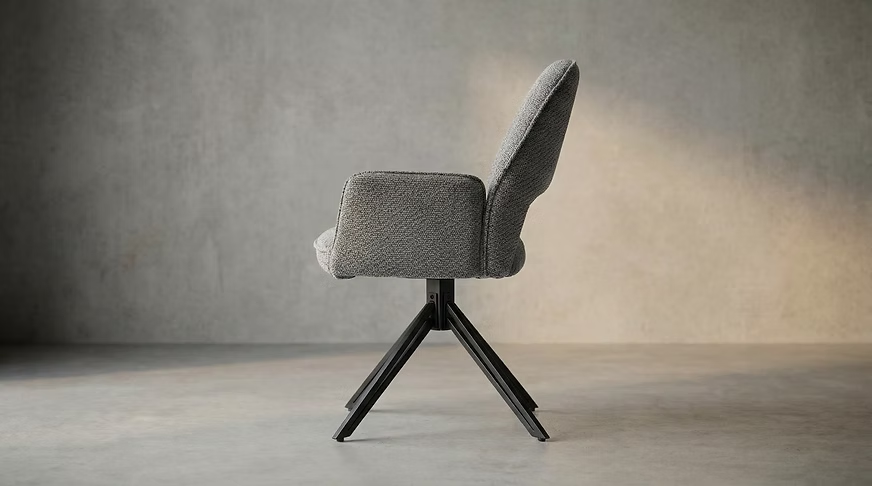
Ergonomics matters because dining chairs are used in a unique seating context. Unlike lounge seating, dining chairs must support a person comfortably at a table, often for meals, conversation, work, or extended social use. That means the chair must balance upright posture with enough comfort for longer sitting periods.
For sourcing teams, ergonomics also affects business performance. A chair that is too low may feel awkward with standard table heights. A chair with a deep seat may not suit shorter users. A backrest with the wrong angle may look elegant but feel tiring after twenty minutes. These are not minor details. They directly shape the customer experience and often determine whether a chair is perceived as practical or disappointing.
A useful sourcing principle is this: visual appeal may win first attention, but ergonomic comfort often decides long-term success. Buyers who ignore this principle risk selecting products that generate hesitation in retail environments and complaints after delivery.
Core Ergonomic Factors to Evaluate
Seat Height
Seat height is one of the most important ergonomic dimensions in a dining chair. It determines whether the user can sit comfortably with feet flat on the floor and forearms positioned naturally relative to the table.
Most dining chairs are designed to work with standard dining table heights, but small differences in seat height can significantly change the sitting experience. If the seat is too high, users may feel pressure under the thighs and reduced foot support. If the seat is too low, the knees may rise too high, creating discomfort and a poor dining posture.
When evaluating seat height, buyers should assess compatibility with common dining table dimensions in their target market. They should also consider the compression behavior of the seat cushion. A padded chair may measure one height when unloaded and perform differently when occupied.
A practical takeaway is that seat height should never be reviewed in isolation. It must be assessed together with table height, cushion compression, and user posture.
Seat Depth
Seat depth affects how well the chair supports the thighs without pressuring the back of the knees. This is especially important for dining chairs because users are expected to sit upright and move in and out of the chair with ease.
A seat that is too deep can make it difficult for shorter users to reach the backrest while maintaining a natural leg position. A seat that is too shallow may feel unsupported and less secure. Good seat depth allows the sitter to use the backrest while keeping a small clearance between the front edge of the seat and the back of the knee.
For sourcing, seat depth should be matched to the intended customer segment. A chair for residential family use may need broader body-size accommodation. A chair for hospitality may require a more universally accessible seating profile. Product teams should test chairs with users of different heights rather than relying only on drawings.
Seat Width
Seat width influences comfort, accessibility, and perceived generosity. A narrow chair may create a clean visual profile, but it can feel restrictive in real use. A wider seat may improve comfort but also change carton efficiency, table fit, and space planning.
This is where ergonomic sourcing becomes a business decision. The right width depends on the use case. Compact urban dining products may prioritize footprint efficiency. Premium retail collections may benefit from a more spacious seat feel. Hospitality buyers may need a width that balances comfort with room density.
The key point is that seat width should support the target user without making the chair feel confining or oversized for the intended setting.
Backrest Shape and Angle
Backrest design strongly influences posture support and overall comfort perception. In dining seating, the backrest should support an upright but relaxed position. If the angle is too straight, the chair may feel rigid. If it reclines too much, it may feel unsuitable for dining posture and table interaction.
The shape of the backrest also matters. A flat back may look minimal, but a slightly contoured back often provides better support. The upper and mid-back contact area should feel stable and natural rather than forcing the user into one narrow seating position.
A well-designed backrest helps the chair feel comfortable quickly. This matters in retail and showroom settings, where first impressions form within seconds. Comfort that is immediately noticeable is often easier to sell.
Lumbar Support
Lumbar support refers to how the chair supports the natural curve of the lower back. Not every dining chair needs pronounced lumbar shaping, but the lower back area should not feel hollow, unsupported, or sharply pressured.
In many dining chairs, lumbar support is created subtly through curvature, upholstery shaping, or flexible material behavior. The goal is not to imitate an office chair. The goal is to reduce lower back strain during typical dining use.
For buyers, the question is not whether the chair advertises lumbar support, but whether the lower back feels naturally supported during seated use. This is best tested physically rather than assumed from visual design.
Cushioning and Pressure Distribution
Cushioning quality affects comfort, durability, and perceived value. Ergonomically, the seat should distribute body weight evenly and avoid harsh pressure points. A cushion that is too soft may feel comfortable for a few minutes but quickly bottom out. A cushion that is too hard may feel durable but uncomfortable.
This is why foam density, resilience, and construction matter. Good ergonomic performance depends on sustained support, not just initial softness. Buyers should ask how the cushion performs after repeated use, not only how it feels in a first sit test.
Backrest padding should also be evaluated. Thin or uneven padding can make a chair feel lower in quality, even when the outer upholstery appears premium. Pressure mapping is not always available, but repeated sitting tests by multiple people can reveal whether support is balanced and consistent.
Armrests, If Applicable
Not all dining chairs include armrests, but when they do, armrest ergonomics becomes critical. Armrests that are too high may prevent the chair from sliding under the table. Armrests that are too wide may interfere with seating density. Armrests that are too low may offer little real support.
Armrests should assist posture and comfort without disrupting table use. This is particularly important for dining armchairs used in premium residential settings, senior-friendly collections, or hospitality environments.
The sourcing lesson is clear: armrests must be evaluated as functional features, not just styling features.
Stability and Structural Balance
A dining chair cannot be ergonomic if it feels unstable. Structural balance affects the user’s sense of safety and comfort from the moment they sit down. Wobble, uneven leg contact, weak joints, or excessive flex can reduce confidence and create immediate dissatisfaction.
Stability also affects movement ergonomics. The chair should allow the user to sit down, shift naturally, and stand up without feeling that the frame is tipping or twisting. This is especially important for older users and commercial settings.
From a sourcing perspective, structural ergonomics overlaps with engineering and quality control. A visually balanced chair must also be mechanically balanced in real-world use.
Material Behavior and Surface Interaction
Materials influence ergonomics more than many buyers expect. Upholstery texture, seat slip resistance, breathability, and thermal feel all shape comfort. A smooth surface may look refined but feel slippery. A non-breathable material may become uncomfortable in warm environments. A stiff upholstery cover may reduce the benefit of the foam underneath.
Wood, metal, molded plastic, and upholstered shells each behave differently. The ergonomic quality of a chair depends not only on form but on how materials respond under body weight and daily use.
This is why material selection should be tested in realistic conditions. A chair that performs well in a showroom may behave differently in extended residential or hospitality use.
A Practical Ergonomic Evaluation Framework for Buyers
A sourcing team needs a repeatable method for comparing models. The table below provides a simple evaluation framework for dining chair ergonomics.
Ergonomic Factor | What to Check | Common Risk if Ignored | Why It Matters in Sourcing |
Seat Height | Alignment with standard table height and user foot position | Awkward sitting posture | Affects comfort, usability, and table compatibility |
Seat Depth | Thigh support and knee clearance | Poor fit for shorter or taller users | Improves user range and comfort consistency |
Seat Width | Room for natural sitting without crowding | Restrictive feel or oversized footprint | Impacts comfort and commercial positioning |
Backrest Angle | Upright support for dining posture | Fatigue or unnatural posture | Important for real dining use and first-sit comfort |
Lumbar Support | Lower back contact and support | Lower back discomfort | Increases perceived comfort and quality |
Cushion Performance | Support over time, not just initial softness | Bottoming out or excessive hardness | Affects durability and long-term user satisfaction |
Armrest Fit | Clearance under table and usable support | Poor table fit or limited functionality | Critical for dining armchairs and premium lines |
Stability | Wobble, frame balance, and sitting security | Safety concerns and complaints | Reduces return risk and strengthens product trust |
Material Behavior | Breathability, grip, and flexibility | Heat buildup, slipping, or stiffness | Shapes comfort in daily use |
How to Test Ergonomics Before Placing Orders
The best way to evaluate dining chair ergonomics is through physical testing. Technical sheets are useful, but they rarely reveal the full seating experience. Buyers should test samples in conditions that mirror actual use.
Test with Different Body Types
A chair that feels comfortable for one person may not work well for others. Seating trials should include users of different heights and body proportions. This helps identify whether the chair has broad commercial usability or only a narrow fit profile.
Test at a Real Dining Table
A dining chair should be assessed together with a table of standard market height. This reveals whether arm position, seat height, and entry clearance feel natural. Evaluating the chair alone can miss major usability problems.
Sit for Long Enough to Notice Fatigue
Quick sit tests are not enough. Ergonomic weaknesses often appear after ten to twenty minutes. Buyers should remain seated long enough to detect pressure buildup, back fatigue, or posture strain.
Check Entry and Exit Ease
Good ergonomics includes movement, not just static comfort. Users should be able to sit down and stand up without strain, catching, or instability. This is especially relevant for family, senior, and hospitality markets.
Review Cushion Recovery and Frame Confidence
After repeated use, cushions should recover shape and the chair should maintain a stable, reassuring feel. Short-term comfort with weak long-term performance is a common sourcing mistake.
Ergonomics and Market Positioning

Ergonomics should also be aligned with the intended sales channel and customer segment. A value-focused retail product may prioritize essential comfort and visual appeal at a sharper cost target. A premium collection may justify more advanced contouring, better foam performance, and broader user accommodation. A hospitality chair may require ergonomic consistency across heavy daily use.
In other words, there is no single perfect ergonomic profile for every dining chair. There is only the right ergonomic profile for a defined market need. Strong sourcing decisions connect comfort performance with price point, channel expectations, and end-user behavior.
A useful strategic sentence is this: the best ergonomic dining chair is not the one with the most features, but the one whose comfort profile matches the customer and usage context most effectively.
FAQ
What is the most important ergonomic factor in a dining chair?
The most important ergonomic factor is overall seating balance, but seat height is often the first dimension to verify. If seat height is wrong, the relationship between the user, the chair, and the table is immediately compromised.
How is a dining chair different from an ergonomic office chair?
A dining chair is designed for upright table use, shorter seating cycles, and visual integration with dining furniture. An office chair typically includes more adjustability and task-oriented support. Dining chair ergonomics should focus on natural posture, comfort, and ease of use without overcomplicating the form.
Should B2B buyers prioritize comfort or design?
B2B buyers should prioritize both, but comfort should not be sacrificed for appearance. A chair that looks strong but feels uncomfortable is more likely to underperform in real-world sales and customer satisfaction.
How can buyers assess ergonomics without laboratory testing?
Buyers can assess ergonomics through structured sample testing, multi-user sit trials, real table pairing, repeated-use checks, and stability review. Practical physical testing is often more valuable than relying only on visual design or specification sheets.
Does thicker cushioning always mean better ergonomics?
No. Thicker cushioning does not automatically create better comfort. Ergonomic performance depends on support, resilience, pressure distribution, and how the cushion behaves over time.
Why is ergonomics important for furniture retailers and importers?
Ergonomics is important because it affects customer satisfaction, perceived product quality, return rates, and repeat business. In commercial terms, better ergonomic evaluation helps reduce sourcing risk.
Conclusion

Ergonomics is one of the most important factors to evaluate when sourcing dining chairs because it directly affects comfort, usability, product perception, and long-term market performance. The essential factors include seat height, seat depth, seat width, backrest angle, lumbar support, cushion behavior, armrest fit, frame stability, and material interaction. Together, these elements determine whether a chair works well in real dining use.
For B2B buyers, ergonomic sourcing is not a soft consideration. It is a practical quality filter that helps identify products with stronger commercial potential. A dining chair that supports the body well is more likely to satisfy end users, perform across multiple markets, and strengthen trust in the product line.
The most effective sourcing approach is simple: test chairs in realistic conditions, evaluate them across body types, and treat ergonomic comfort as a measurable buying criterion. When ergonomics is built into the sourcing process, buyers make better product decisions and create stronger value for the market.


Comments