


EN 12520 Dining Chair Durability Testing Requirements: A Practical Buyer’s Guide

If you source dining chairs for the European market, you have probably seen EN 12520 mentioned on specification sheets, test reports and supplier presentations. For professional buyers, this standard is much more than a compliance checkbox. It is a practical tool for evaluating safety, structural quality and long-term product performance. The challenge is not just finding a supplier that says “we meet EN 12520.” The real question is whether you can trust that statement across an entire container, a full season and repeat orders.
Having worked with European furniture wholesalers, retailers and project buyers for many years, I have seen how easily a good test report can hide wider sourcing risks. A chair can pass a laboratory test on a single sample, yet still develop loose joints, bent frames or damaged upholstery after a few months in real homes. That is why this article focuses on the EN 12520 dining chair durability testing requirements themselves, what they mean for your assortment, and how to connect lab results to mass-produced stock.
What EN 12520 Means for Dining Chair Buyers
EN 12520 is a European standard focused on the safety, strength and durability of domestic dining chairs. It provides a common framework for testing so that manufacturers, importers and retailers can compare performance in a structured way. For buyers in Germany, the Netherlands, the UK, Poland and other European markets, it is one of the key references when building a reliable dining chair collection.
At its core, the standard helps answer three practical questions. Is the chair safe for normal household use? Is it strong enough to withstand the loads and forces people commonly apply? And will it keep performing over time without premature failure? Those questions matter because returns, warranty claims and reputational damage usually come not from obvious defects, but from chairs that degrade slowly in real use.
It is important to be clear about scope. The EN 12520 domestic dining chair safety standard applies primarily to private household use. Contract furniture used in restaurants, hotels or offices is typically subject to more demanding usage patterns and may require additional testing beyond the domestic level. Even so, EN 12520 remains a fundamental baseline that every credible dining chair supplier should be able to explain and support with proper documentation.
For B2B buyers, the business value lies in predictability. A chair that has been properly tested against EN 12520 strength and durability requirements is easier to position, easier to guarantee and less likely to create post-sale problems. It also gives you a more objective basis for comparing suppliers, instead of relying only on price, photos and showroom samples.
Core Test Items Covered by EN 12520 for Dining Chairs
When you look at the EN 12520 dining chair durability testing requirements, you will find a set of assessments designed to simulate the way people actually use dining chairs in everyday life. Some tests measure static strength. Others look at impact, fatigue or stability. Each one targets a different failure mode that can occur in a home environment.
Static load tests apply controlled force to the seat, backrest and armrests to check whether the structure can withstand expected loads without breaking or deforming excessively. These tests are designed to evaluate whether the chair remains safe under heavy but realistic use. Weak points usually show up at frame joints, connection brackets or the seat support structure.
Fatigue or durability tests involve repeated loading over many cycles. Instead of one heavy force, the chair receives many smaller, repeated forces that mimic months or years of normal use. This is where many designs that look solid on first impression begin to reveal problems. Screws can loosen, welds can develop cracks and wooden or metal components can gradually weaken.
Stability tests assess whether the chair is likely to tip over under typical use conditions, such as leaning back or shifting weight sideways. Stability is closely related to base geometry, leg angle, centre of gravity and overall weight distribution. For retail buyers, stability issues can quickly generate safety complaints and product liability concerns.
Impact tests evaluate how the chair responds to sudden forces, such as someone sitting down heavily or dropping into the seat. These tests help identify brittle frames, weak upholstery attachment points and seat structures that fail under dynamic load rather than gradual pressure.
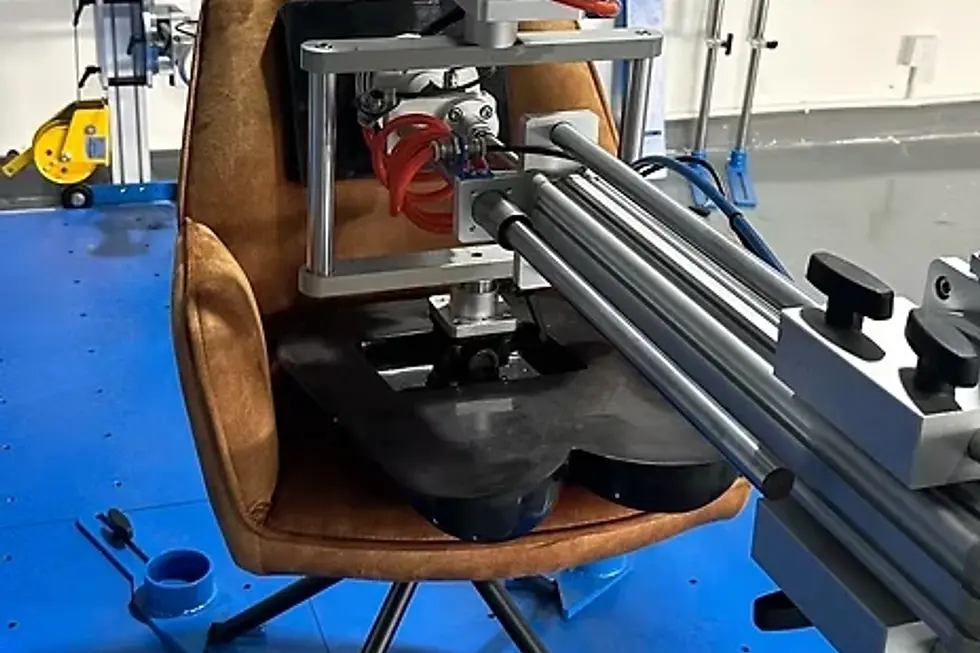
See how EN 12520 durability testing evaluates dining chair seat and backrest strength under simulated real-world use conditions.
Beyond these structural tests, a complete evaluation should also consider the materials used in production. For example, fabric abrasion resistance, colour fastness and breathability are not part of structural EN 12520 testing, but they strongly influence how long the chair remains commercially acceptable in a customer’s home. At ASKT, we combine structural testing with fabric performance checks because we know that durability is not only about the frame. It is also about the surface that the customer sees and touches every day.
How to Read an EN 12520 Test Report Correctly
Many buyers receive a test report, see a “passed” stamp and file it away. That is a mistake. EN 12520 dining chair test report interpretation is one of the most useful skills a category manager or quality manager can develop, because it helps you identify real risk levels before you place an order.
First, check exactly which model was tested and how the sample is described. Small details matter. If the test report lists a specific frame thickness, foam density, fabric type or connector system, but your mass production order uses different components, the report may not represent what you are actually buying. This is a common gap, especially when suppliers offer multiple fabric or frame options under the same product name.
Second, confirm which test items were included. Not all reports cover the full range of EN 12520 strength and durability requirements. Some may include only basic static tests, while others omit stability, impact or fatigue cycles. The report should clearly list each test method, the applied load or number of cycles, and the result for each item.
Third, pay attention to failure modes and limitations. A report that says “passed” can still contain valuable information about where the chair is close to its limit. If the backrest moved significantly under load or if a joint showed minor deformation at the end of a fatigue test, that tells you something about the design margin. In mass production, with normal variation in materials and assembly, small margins can become real failures.
Fourth, check the issuing body and sample identification. A credible report should clearly identify the testing laboratory, the date of testing, the sample reference and the manufacturer or supplier that submitted the chair. Reports that lack clear traceability are harder to verify and carry more sourcing risk.
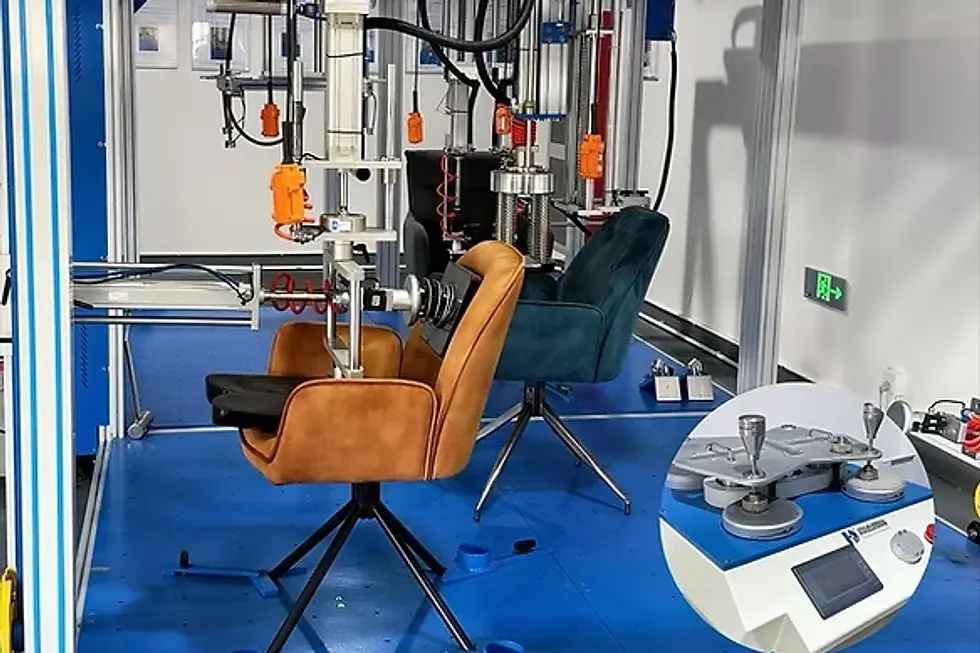
Lab testing environments help buyers verify that dining chair performance is consistent between sample units and mass-produced stock.
It is also worth remembering that a test report is a snapshot. It tells you how a specific sample performed on a specific day. It does not automatically guarantee that every chair coming off the production line six months later will perform the same way. That is why report interpretation should always be paired with factory audits, incoming inspection and ongoing quality checks.
Sample vs. Mass Production: Why Consistency Matters
One of the biggest gaps in furniture sourcing is the difference between a tested sample and the chairs that actually arrive in your warehouse. Dining chair sample vs mass production consistency is not just a quality control detail. It is the bridge between a passing test result and a commercially reliable product range.
Why does this gap exist? Because samples are often hand-built or selected from early production runs with extra care. The frame may use slightly thicker material, the welds may be cleaner, the foam may be denser and the assembly may be done by the most experienced workers. In mass production, small cost-saving changes, material substitutions or process shortcuts can gradually shift the final product away from the original sample.
For EN 12520, this matters because the standard’s requirements are applied to the chair as a complete product. If the frame material changes, the joint design changes or the seat support system changes, the test result may no longer be valid. A chair that passed with thicker steel tubing may fail with thinner tubing. A chair that passed with solid wooden dowels may develop problems with cheaper screw connectors.
Upholstery and foam also play a role in how loads are distributed and how the chair feels in use. Even if the frame remains the same, lower-density foam or a thinner seat deck can change ergonomics, durability and perceived quality. For buyers, that means higher return rates, more customer complaints and more difficulty protecting your brand position in a competitive market.
To manage this risk, experienced buyers usually define a golden sample and hold the supplier accountable against it. That sample should represent the exact materials, construction and finish of mass production. It should be signed off by both parties and used as the reference for incoming inspection, repeat orders and any dispute resolution.
At ASKT, we treat consistency as a core part of our manufacturing discipline. Whether it is fabric selection, metal frame production, upholstery or packaging, we use controlled materials, documented processes and regular inspection so that later production units match the first one. This is also why we emphasize transparent quality control. Buyers should not have to guess whether their order matches the sample. They should be able to see it in the production records, inspection reports and testing history.
Practical Checklist for Quality Managers and Category Managers
If you are responsible for sourcing dining chairs for a European retail chain, wholesale business or product collection, you can use the following checklist to evaluate EN 12520 compliance in a practical way. It is designed to move beyond paperwork and focus on the issues that affect commercial performance.
Confirm that the supplier can provide a clear test report linked to the exact model and configuration you intend to order.
Check that the report covers the main areas relevant to the EN 12520 dining chair durability testing requirements, including seat strength, backrest strength, stability and durability where applicable.
Match the materials listed in the report to your mass production specification, including frame type, seat support structure, foam and main upholstery components.
Ask the supplier how they maintain dining chair sample vs mass production consistency across repeat orders and material batches.
Review incoming inspection procedures for frames, upholstery, hardware and final assembly to catch deviations early.
Clarify whether the supplier performs internal checks or only relies on third-party samples sent to a laboratory.
Discuss what happens if a design change occurs, such as a different bracket, foam supplier or tube source, and whether updated testing will be required.
Consider product usage context: if the chair is intended for student housing, cafés or other high-turnover environments, the EN 12520 domestic dining chair safety standard may not be sufficient on its own.
This list is not meant to replace formal certification or legal review. It is a practical tool for having better conversations with suppliers. When you ask specific questions about materials, processes and consistency, you quickly separate manufacturers that understand compliance from those that treat test reports as marketing assets.
How ASKT Approaches Testing and Production Consistency
From our perspective as a B2B dining furniture manufacturer serving European buyers, EN 12520 is not an afterthought. It is part of how we design, validate and produce dining chairs. Our approach is based on the idea that testing should support real-world reliability, not just check a box on a specification sheet.
We begin by building prototypes and evaluating them structurally before sending anything to an external laboratory. This internal evaluation helps us identify weak points early, adjust frame geometry, improve joint design and optimize seat support. By the time a chair reaches formal EN 12520 testing, we already have a good understanding of how it is likely to perform and where the design margins lie.
We also pay close attention to fabric performance, even though it sits outside the structural scope of the standard. Our fabrics are evaluated for abrasion resistance, colour fastness and breathability, and many offer waterproof, stain-resistant and pet-friendly characteristics. OEKO-TEX® STANDARD 100 certification ensures that harmful substance safety requirements are met. We see this as part of total durability, because a chair that stays visually attractive over time is just as important commercially as one that stays structurally sound.
On the production side, we use controlled manufacturing equipment such as automated cutting machines, punching machines, nailing machines and automatic welding robotic arms to reduce variation between individual chairs. BSCI-certified factory operations ensure that production quality and worker safety are managed systematically. This level of process control is what makes dining chair sample vs mass production consistency realistic instead of aspirational.
Frequently Asked Questions About EN 12520 Testing
What does EN 12520 cover for dining chairs?
EN 12520 defines the safety, strength and durability requirements for domestic dining chairs. It sets performance criteria for structural integrity, stability and long-term use so that chairs placed on the European market meet consistent safety standards.
How should I interpret an EN 12520 dining chair test report?
Start by confirming the test scope, the chair model tested, sample identification and the testing laboratory. Then check which test items were performed, the applied loads and cycles, and whether each item passed. Pay special attention to any notes on failure modes, sample modifications and limitations, because they tell you where the design may still carry risk.
Why does sample vs mass production consistency matter for EN 12520?
An EN 12520 test report only reflects the specific samples tested. If mass-produced chairs use thinner tubes, weaker joints, lower-density foam or different fabrics, the final product may not perform the same way. For buyers, consistent materials, construction and assembly processes are what turn a passed test into reliable shelf performance.
Is EN 12520 the same standard for contract and domestic dining chairs?
EN 12520 is focused on domestic dining chair use. Contract and hospitality seating often falls under more demanding standards because of higher frequency and heavier use. However, the EN 12520 domestic dining chair safety standard is still a useful baseline for product safety and structural quality when evaluating new suppliers.
Final Thoughts on Using EN 12520 in Sourcing
At the end of the day, EN 12520 is only as useful as the way you apply it. A test report hanging on a supplier’s wall does not protect your customers, your margin or your brand. What protects you is a clear understanding of the standard, a careful reading of the evidence, and a manufacturing partner that can deliver consistent results from sample to mass production.
For European furniture buyers, the best approach is to treat EN 12520 as the starting point of a quality conversation, not the end of it. Use the standard to compare suppliers, validate designs and set expectations. Then go deeper. Ask about materials. Ask about process control. Ask about how consistency is maintained across orders, seasons and material batches. The answers you receive will tell you more about long-term performance than any single certificate ever could.
If you are currently evaluating dining chair suppliers for the European market and want to understand how a manufacturer approaches EN 12520 compliance, testing and production consistency, you can request the available test results for the chair model you are interested in. We are happy to walk you through the testing background, material specifications and quality control measures that help buyers build reliable, commercially successful dining chair collections.
FAQ
What does EN 12520 cover for dining chairs?
EN 12520 defines the safety, strength and durability requirements for domestic dining chairs. It sets performance criteria for structural integrity, stability and long-term use so that chairs placed on the European market meet consistent safety standards.
How should I interpret an EN 12520 dining chair test report?
Start by confirming the test scope, the chair model tested, sample identification and the testing laboratory. Then check which test items were performed, the applied loads and cycles, and whether each item passed. Pay special attention to any notes on failure modes, sample modifications and limitations, because they tell you where the design may still carry risk.
Why does sample vs mass production consistency matter for EN 12520?
An EN 12520 test report only reflects the specific samples tested. If mass-produced chairs use thinner tubes, weaker joints, lower-density foam or different fabrics, the final product may not perform the same way. For buyers, consistent materials, construction and assembly processes are what turn a passed test into reliable shelf performance.
Is EN 12520 the same standard for contract and domestic dining chairs?
EN 12520 is focused on domestic dining chair use. Contract and hospitality seating often falls under more demanding standards because of higher frequency and heavier use. However, the EN 12520 domestic dining chair safety standard is still a useful baseline for product safety and structural quality when evaluating new suppliers.


Comments