


How to Choose a Care Home Chairs Manufacturer: The B2B Sourcing Guide for European Assisted Living
- Wolfgang Adler

- 4 hours ago
- 9 min read
Evaluating a Care Home Chairs Manufacturer: Why Zoning Matters for Assisted Living
Sourcing contract furniture for healthcare and senior living facilities is a multifaceted challenge that goes far beyond simple aesthetic coordination. Unlike typical residential furniture projects, seating designed for senior care environments must carefully balance diverse physical needs, support varying levels of resident mobility, and withstand intensive commercial cleaning protocols. For category managers, procurement officers, and B2B furniture importers in Europe, reducing sourcing risk begins with a fundamental understanding of spatial zoning.
Every modern senior care facility is divided into distinct functional zones, each presenting its own unique challenges. The physical demands, ergonomic requirements, and hygiene levels of a communal dining room are vastly different from those of a quiet resident lounge, a private bedroom, or a busy reception lobby. Standardising your supply chain with a highly specialised care home chairs manufacturer allows B2B buyers to address these diverse zonal requirements while maintaining a cohesive design language across the entire senior living development.
When a care home chairs manufacturer designs for communal dining, the weight and slide mechanics are completely different from a lounge room. If an importer attempts to use standard residential chairs in a high-frequency dining hall, the joints will often fail within months due to constant dragging and heavy usage. This mismatch results in expensive returns, damage claims, and a ruined brand reputation for the wholesaler. Working with a dedicated care home chairs manufacturer helps mitigate these liabilities by ensuring that each zone's seating is structurally optimized for its specific stress level.
From a professional B2B procurement perspective, attempting to source unrelated designs from multiple suppliers for different wings of a facility can quickly complicate logistics, inflate minimum order quantities (MOQs), and increase administrative overheads. Partnering with a dedicated care home chairs manufacturer that offers modular manufacturing systems—such as standardized seat shells paired with interchangeable metal or wooden bases—directly solves this operational bottleneck. This modular flexibility allows wholesalers and contract buyers to optimize container loading and lower inventory risk, while still delivering tailor-made seating configurations for every unique zone.
Dining Area Seating: Selecting Assisted Living Dining Chairs with High Cleanability
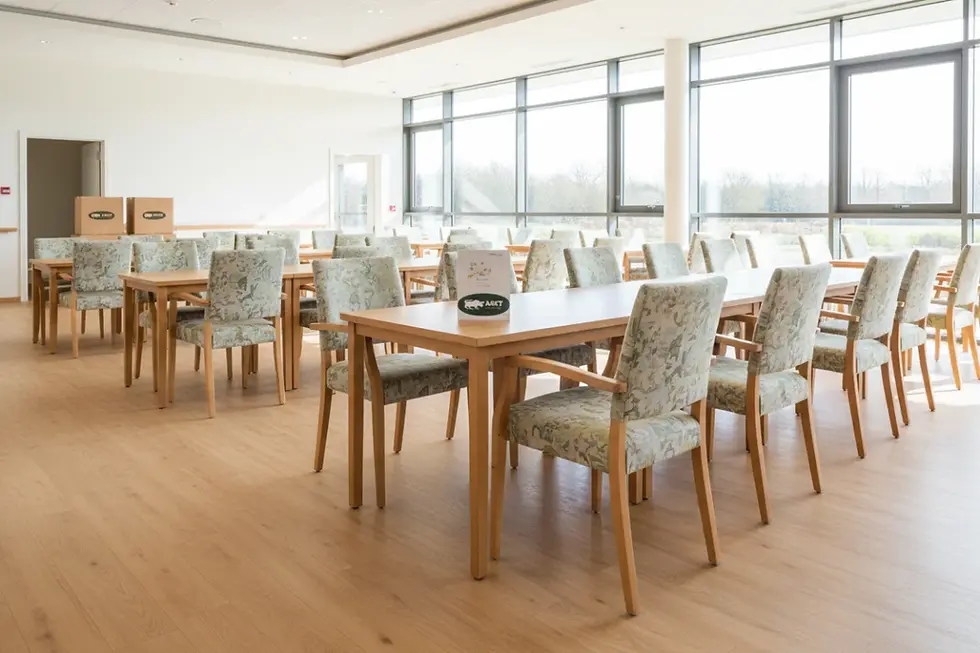
In senior living and assisted living communities, the communal dining room serves as a high-frequency zone where social interaction meets daily physical activity. When selecting assisted living dining chairs, B2B buyers must prioritize structural stability, ergonomic assistance, and high-level sanitization. Senior residents rely heavily on the stability of a chair frame when sitting down or standing up, making structural integrity a non-negotiable metric for risk-averse procurement managers. To prevent tipping and catastrophic joint failures, frame components must be manufactured with extreme precision.
When sourcing assisted living dining chairs, commercial buyers should also pay close attention to the structural leg profile. A professional care home chairs manufacturer will design these chairs with slightly splayed back legs or solid wood stretchers. This design increases the physical footprint of the chair without creating a tripping hazard, providing much-needed resistance to backward tilting. Additionally, when evaluating assisted living dining chairs, consider the weight of the units. If the chairs are too heavy, frail residents will struggle to pull themselves close to the table, and caregivers will face repetitive strain injuries. Conversely, if they are too light, they may lack the structural mass required to support a resident leaning heavily on one armrest during egress.
At the factory level, a premium care home chairs manufacturer utilizes advanced machinery to guarantee structural consistency. The integration of automated precision milling and reinforced joint construction ensures that seat bases are flawlessly reinforced. These automated systems eliminate the structural inconsistencies common in manual hand-building, ensuring that every batch of dining chairs meets the same high mechanical safety standards required for heavy-duty commercial environments.
Cleanability is another critical factor in active dining areas. Frequent food and liquid spills require high-frequency sanitization with harsh chemical agents, which can quickly degrade low-quality fabrics and finishes. Procurement teams should specify waterproof care home chairs that feature advanced textile technologies. High-performance fabrics with moisture-barrier properties allow caregivers to wipe away surface spills easily, preventing liquids from seeping into the underlying foam. If moisture penetrates the foam, it can lead to bacterial growth, mold, and unpleasant odors, which compromise the hygienic standards of the entire facility.

To help product managers evaluate dining chairs for their senior living portfolios, the following checklist outlines the essential technical features to look for in active dining seating:
Technical Feature | B2B Sourcing Criterion | Commercial Value for Buyers |
|---|---|---|
:--- | :--- | :--- |
Frame Reinforcement | Precision joint assembly and automated frame reinforcement | Prevents joint loosening under high-load daily use, reducing replacement costs |
Upholstery Barrier | High-performance waterproof coating and easy-clean fabrics | Allows rapid wipe-downs and prevents moisture from damaging internal cushions |
Ergonomic Leverage | Extended armrests aligned with the front leg of the chair | Provides vital leverage points for residents standing up, enhancing independence |
Mobility Features | Auto-return swivel mechanisms or lightweight metal structures | Promotes user movement while minimizing caregiver physical strain |
Lounge and Communal Seating: Why a Contract Healthcare Seating Supplier Prioritises Ergonomics
Resident lounges and communal hubs are designed for long-term relaxation, recreational activities, and mental stimulation. Because residents spend extended hours in these communal spaces, the primary goal of a care home chairs manufacturer when designing lounge seating is ergonomic pressure relief and postural support. Unlike active assisted living dining chairs, lounge chairs must accommodate deep, prolonged sitting without causing physical fatigue, muscle strain, or circulatory issues.
An experienced contract healthcare seating supplier understands that lounging in a care environment is not passive; it is a critical component of physical therapy and daily comfort. When we look at standard consumer lounge chairs, they are often low to the ground and have deep, soft cushions that swallow the user. For a senior citizen with reduced mobility, getting out of such a chair is almost impossible without assistance. Therefore, a contract healthcare seating supplier will design lounge chairs with a firmer, high-resilience foam core topped with a pressure-relieving layer. This ensures that the resident remains supported at an optimal height, making standing up much easier and safer.
To achieve this level of comfort, professional contract buyers should partner with a contract healthcare seating supplier that utilizes advanced pocket spring seating systems. Pocket springs distribute body weight evenly across the seat cushion, adapting dynamically to the user's posture and reducing high-pressure focal points. This technology is vital for protecting vulnerable residents who spend major portions of their day seated and are susceptible to pressure sores.
Sourcing lounge seating from an experienced contract healthcare seating supplier ensures that the frames are constructed from high-durability materials. Heavy-duty metal frames finished with a protective powder coating offer superior impact resistance against wheelchairs, walker frames, and cleaning equipment. This minimizes surface scuffing and structural deformation, extending the service life of the furniture and maximizing the buyer's return on investment.
Visitor and Transition Zones: Optimising Nursing Home Furniture Wholesale Sourcing
Transitional zones, including reception lobbies, visitor lounges, and hallway seating alcoves, serve as the first point of contact for family members, medical staff, and regulatory inspectors. The furniture in these zones must project a warm, hospitable aesthetic while maintaining the same rigorous contract performance standards required inside resident rooms.
For purchasing directors engaging in nursing home furniture wholesale, transitional areas present an excellent opportunity to build aesthetic appeal. A professional contract healthcare seating supplier should offer versatile seating solutions that can be easily configured to facilitate family discussions, social gatherings, or clinical assessments. Wholesalers should prioritize lightweight, durable, and highly versatile seating models that can be moved and repositioned without compromising joint stability.

To manage different styling requirements in visitor areas without complicating your inventory, modular product architecture is highly effective. Utilizing a standardized seating shell combined with various base options allows B2B importers to achieve design flexibility while consolidating their purchasing volume with a single care home chairs manufacturer. This modular approach lowers production costs, reduces shipping volume through knocked-down (KD) packaging, and minimizes warehouse management challenges. By reducing the overall number of unique components, wholesalers can achieve competitive pricing, maintain consistent quality, and simplify replacement parts logistics.
Crucial Contract Standards: Why Your Care Home Chairs Manufacturer Must Focus on Structural Safety
When purchasing nursing home furniture wholesale, structural integrity is the most important factor in risk mitigation. Frame failures in healthcare facilities are a serious liability, meaning contract furniture buyers must evaluate a care home chairs manufacturer based on its manufacturing processes and compliance with standard European durability testing.
Why must structural testing be a key selection metric? In Europe, contract furniture must endure rigorous mechanical tests evaluating durability, stability, and impact resistance. If a care home chairs manufacturer cannot provide testing documentation, sourcing risk multiplies. Frame failures can cause severe resident falls, leading to liability for care operators and suppliers. Thus, verifying that your care home chairs manufacturer adheres to European safety testing is essential for risk mitigation.
Modern furniture factories minimize structural risks by replacing manual, inconsistent processes with automated production machinery. Standard manufacturing workflows should include:
Automated Metal Frame Fabrication: Used on metal-frame collections to guarantee perfect weld penetration, eliminating the internal micro-voids and weak joints common in manual hand-welding.
Precision Fabric Batch Cutting: Ensures consistent upholstery dimensions and tight tensioning, preventing premature fabric wear, wrinkling, and tearing.
Eco-Friendly Adhesive Application: Utilizing clean, safe bonding agents to protect the health of both assembly line workers and vulnerable senior residents.
In addition to physical safety, ethical manufacturing and supply chain transparency have become key requirements in the European market. Importers, wholesalers, and project buyers are increasingly evaluated based on the environmental, social, and governance (ESG) standards of their global manufacturing partners.
Choosing a care home chairs manufacturer that implements strict ethical production standards guarantees that workers operate in safe, compliant environments. Safety protocols—such as providing protective gear, dust-extraction systems in woodworking areas, and proper ventilation during finishing processes—ensure compliance with international labour standards. This commitment to ESG practices protects your brand from ethical sourcing risks and aligns with the corporate sustainability goals of modern European organizations.
High-Performance Upholstery: Sourcing Waterproof Care Home Chairs for High-Traffic Zones
The choice of upholstery fabric is critical when sourcing waterproof care home chairs. Traditional hospital vinyls and cheap plastics often feel cold and institutional, and they can cause discomfort and skin irritation due to poor breathability. Today's commercial healthcare facilities demand high-performance fabrics that combine medical-grade performance with a warm, welcoming, and high-end residential feel.
Partnering with a reliable care home chairs manufacturer helps contract buyers select fabrics that solve this functional issue. Sourcing waterproof care home chairs is not just about preventing liquid penetration; it is also about maintaining a clean, odor-free environment. Cheap fabrics allow liquids to seep into the internal foam, creating a breeding ground for bacteria. High-quality waterproof care home chairs utilize specialized moisture-barrier technology that blocks liquids completely while allowing moisture vapor to escape, ensuring the chair remains fresh, hygienic, and comfortable for years.

For B2B buyers, verifying fabric safety through independent testing is essential for European regulatory compliance. High-quality waterproof care home chairs must be upholstered in fabrics that have earned environmental and health certifications, guaranteeing they are free from harmful chemicals and formaldehyde. For pet-friendly facilities or residences with therapy animals, high scratch-resistance and abrasion-resistance (such as high Martindale cycle ratings) prevent claws from tearing the fabric, while options made from recycled plastic materials support European green initiatives and sustainable B2B sourcing goals.
How to Evaluate a Care Home Chairs Manufacturer for European Compliance
Sourcing healthcare seating from global manufacturing hubs requires a structured evaluation process to mitigate quality and logistics risks. When choosing a B2B partner in China, European buyers—especially those in Germany, the DACH region, and the UK—should look for transparent quality control, design exclusivity commitments, and localized market insights.
A reliable care home chairs manufacturer should demonstrate a deep understanding of European market needs. For example, ASKT's design process is backed by extensive research into European household dining and commercial care layouts, ensuring that the dimensions, wood grain compatibility, and layout patterns match localized market preferences. This deep localization is reflected in our commercial track record of supplying consistent, high-quality contract furniture across major European markets.
To make sourcing as efficient as possible, B2B buyers should look for manufacturers that offer advanced digital tools and transparent quality inspections alongside physical production. Digital consultation platforms streamline sample development by asking targeted questions that prevent communication errors between product managers and factory engineers. Paired with modular product lines, strict container loading optimization, and a rigorous "Test first, ship second" quality policy, this ensures that purchasing managers receive highly consistent, compliant, and durable seating solutions that protect their brand reputation and drive long-term commercial success.
If you are evaluating dining chair, dining table, or lounge seating suppliers for the European market, ASKT can support you with product development, customization, quality testing, and stable export experience. Contact our product specialists today to Request Care Home Seating Plan tailored to your portfolio requirements and reduce your procurement risks.
FAQ
What makes care home chairs structurally different from standard residential chairs?
Care home chairs are engineered with heavy-duty commercial construction to handle high-frequency use. They feature reinforced joints, wider seat profiles, optimal heights to assist resident egress, and fully extended armrests that align with the front leg of the chair to provide maximum leverage when standing up.
How do you ensure that waterproof care home chairs remain comfortable and breathable?
High-quality healthcare seating utilizes engineered fabrics with built-in moisture barriers. These materials prevent surface moisture, liquids, and organic stains from penetrating the foam while still allowing air to circulate, reducing heat build-up and sweating.
Are the fabrics safe for sensitive senior living environments?
Yes. High-performance contract fabrics are certified to be completely formaldehyde-free and tested for harmful substances. They are safe for skin contact, eco-friendly, and highly resistant to daily chemical cleaning, making them ideal for high-traffic healthcare environments.
How does modular furniture design help B2B buyers optimize logistics and reduce costs?
Modular design allows B2B buyers to combine a standard set of seat shells with multiple metal or wooden base designs. This reduces warehousing costs, simplifies inventory management, and allows buyers to mix and match styles to meet varying facility zones under optimized container loads.


Comments