


How Upholstery Fabric Affects Dining Chair Comfort: A B2B Sourcing Guide

For European furniture wholesalers, high-volume retail chains, and hospitality purchasing groups, sourcing contemporary dining furniture is a balancing act of aesthetics, structural durability, and perceived value. When evaluating a chair design, many buyers focus intensively on frame materials, structural stability, and foam density, while overlooking the single component that clients interact with most: the textile. At ASKT, having exported over 550,000 dining chairs to Germany and the wider DACH region in 2024 alone, we consistently observe how a single fabric decision can make or break a product line's success. This guide offers a deep dive into how upholstery fabric affects dining chair comfort and what professional sourcing teams must evaluate to mitigate risk.
Upholstery fabric directly determines dining chair comfort by regulating breathability, temperature transfer, tactile softness, and moisture management, meaning professional buyers must evaluate certified technical properties like abrasion resistance, nano-coatings, and eco-compliance to ensure long-term durability and commercial success.
From the showroom floor to a busy restaurant or private residence, comfort is not a singular metric. Understanding how upholstery fabric affects dining chair comfort requires looking past initial hand-feel to the thermal, mechanical, and safety properties of the textile. Let us examine the technical details of these performance properties.
The Anatomy of Comfort: First-Touch Tactility vs. Long-Term Seating Ergonomics
When a consumer or contract project manager evaluates a dining chair, they experience two distinct phases of comfort: immediate tactile response (first touch) and extended ergonomic support. For professional buyers, understanding how upholstery fabric affects dining chair comfort means recognizing how these two elements interact over years of heavy use.
First-touch tactility is governed by the weave structure, surface finish, and fiber composition of the yarn. High-pile fabrics like velvet or chenille create a sense of luxurious warmth because the raised fibers trap tiny pockets of air, mimicking the soft hand-feel of premium natural materials. Flat-woven polyester or bouclé fabrics, on the other hand, provide a structured, contemporary look with a more distinct grain.
However, a common sourcing pitfall in dining chair fabric selection is choosing a fabric based solely on high surface softness without testing its mechanical interaction with the underlying padding. An overly rigid backing layer on a fabric can restrict the compression of high-density foam, making a pocket-spring seat feel stiff and unresponsive. Conversely, if a textile lacks sufficient elastic recovery, it will stretch and sag under body weight over time. This tension loss creates unsightly pooling, which ruins the seating ergonomics as well as the aesthetic appeal.
To prevent this, high-quality manufacturers utilize advanced automated fabric cutting systems. Precision cutting ensures that the warp and weft grains of the textile align perfectly with the chair's structural seams. This perfect alignment distributes seating tension evenly, allowing the high-density foam and pocket springs to compress and rebound exactly as designed, ensuring long-term ergonomic integrity.

Breathability and Heat Transfer: Why Ventilation Channels Matter in Contract Seating
Thermodynamic comfort is another crucial factor in dining chair evaluations. In restaurants, hotel dining rooms, or extended family dinners, people remain seated for hours. If the chair is upholstered in an impermeable material, body heat is trapped against the seating surface, causing discomfort and sweat accumulation. This is why B2B sourcing managers must prioritize breathable furniture fabric for high-frequency contract or residential use.
Our extensive research into German and Dutch dining habits reveals that thermal discomfort is one of the leading causes of product returns for upholstered chairs. In commercial dining chair upholstery, thermal buildup is often accelerated by low-cost polyurethane (PU) backings applied to strengthen thin fabrics. While this backing increases the fabric's tensile strength, it acts as an absolute barrier to moisture and air. This leads to heat accumulation, causing discomfort within just twenty minutes of sitting. To solve this, technical fabric developers design materials with micro-ventilation channels.
These microscopic gaps in the weave structure allow heat and air to circulate freely. When conducting a dining chair fabric selection, polyester-polyurethane blends or textured flat weaves are preferred over solid synthetic coverings. Our proprietary high-tech fabric line, ASKT-Tex, uses a sophisticated molecular structure with micro-ventilation pathways. It achieves a highly breathable performance that prevents heat build-up while keeping a soft face that is pleasant to touch. When wholesale category managers choose breathable furniture fabric, they ensure the end-consumer remains cool and comfortable throughout their dining experience.
Commercial Grade Durability: Evaluating Fabric Abrasion Resistance and Color Fastness
In B2B purchasing, long-term commercial success depends on product durability. A fabric that feels comfortable during week one but experiences pilling or thinning by month six is a significant liability. For this reason, professional buyers must understand how upholstery fabric affects dining chair comfort over thousands of usage cycles.
To ensure suitability for high-traffic environments, we subject our materials to rigorous laboratory testing, focusing on the following core standards:
Martindale Abrasion Test: This test simulates natural wear by rubbing the fabric against an abrasive surface under a set pressure in a Lissajous pattern. For residential dining chairs, a rating of 15,000 to 20,000 cycles is acceptable. However, for commercial dining chair upholstery, we insist on fabrics that pass 30,000 to 50,000+ cycles. When a fabric degrades and fibers break, the surface becomes rough, causing pilling and a scratchy texture that directly ruins seating comfort.
Color Fastness to Light & Rubbing: Exposure to sunlight near dining room windows can degrade dye molecules, causing uneven fading. Our fabrics undergo light-fastness testing to ensure colors remain bright. We also test for color fastness to rubbing (both wet and dry) to guarantee dyes do not migrate onto a diner's clothing. This prevents commercial complaints and customer dissatisfaction.
By matching the technical durability of the fabric to the specific demands of the project, buyers protect their investments while maintaining the comfort and quality of their seating. This approach is key to securing a reliable, long-term furniture supply.

Advanced Textile Engineering: Hydrophobic Nano-Coatings and Stain-Resistant Solutions
There is often a trade-off in contract and residential dining spaces between cleanability and physical comfort. Traditionally, keeping fabrics stain-free meant applying thick, plastic-like coatings that made the fabric stiff, sticky, and hot. This compromise severely compromised dining chair comfort.
Fortunately, advanced textile engineering has resolved this problem. Today, we utilize molecular-level hydrophobic nano-coatings. Instead of sealing the entire fabric surface with a heavy laminate, these nano-treatments coat individual fibers. This technology has three distinct benefits for upholstered dining chairs wholesale collections:
Liquid Repellency: Red wine, coffee, and oil bead up on the fabric surface rather than sinking into the yarns. This allows users to easily wipe away spills with a dry cloth before they stain.
Soft Hand-Feel: Because the spaces between the woven threads remain open, the fabric keeps its natural softness and flexibility, preserving tactile comfort.
Preserved Airflow: Micro-pores are left unobstructed, allowing the breathable furniture fabric to release body heat efficiently.
Using specialized materials like ASKT-Tex allows buyers to offer products that are both low-maintenance and highly comfortable. This represents a major selling point for European retailers and commercial project specifiers alike.
Compliance and Sustainability: Navigating OEKO-TEX Standards and Recycled Eco-Fabrics for the European Market
For European wholesalers, retail chains, and contract buyers, product safety and environmental compliance are major priorities. Importers in Germany, the Netherlands, and the UK must navigate strict environmental and chemical regulations, including REACH and EUDR (European Union Deforestation Regulation). Sourcing the right material is about more than just physical comfort; it is about ensuring peace of mind.
Every fabric in our standard range is OEKO-TEX® STANDARD 100 certified. This certification guarantees that the textile has been tested for hundreds of harmful substances and is free from formaldehyde, heavy metals, and toxic flame retardants. Because dining chairs are regularly used by families, children, and pets, using non-toxic materials is an essential part of the modern comfort definition.
Furthermore, European sustainability initiatives have driven high demand for green product development. In response, we have introduced fabrics made from recycled plastic bottles. This eco-friendly material is carefully processed and woven to match the softness, strength, and breathability of virgin polyester. Developing products with recycled, certified fabrics helps B2B buyers build a strong, future-proof product line that aligns with the European Green Policy, minimizing compliance risks and meeting the rising market demand for eco-conscious products.
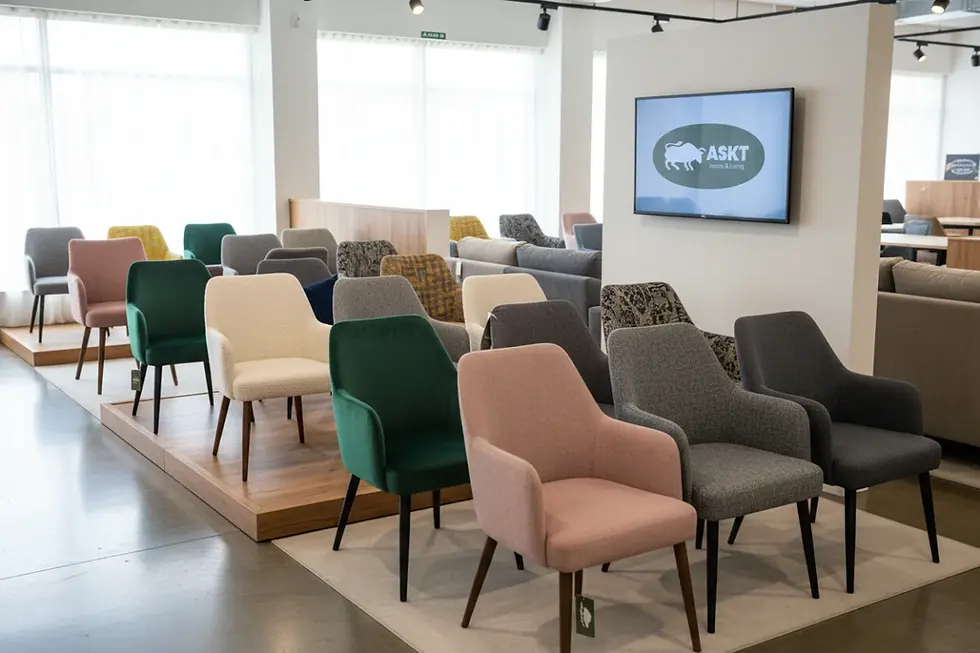
The B2B Sourcing Strategy: A Checklist for Evaluating Dining Chair Fabric Suppliers
Sourcing upholstered dining chairs wholesale from China requires a structured evaluation method to ensure quality and consistency. To help product managers and purchasing directors, we have compiled a comparison matrix showing how different upholstery choices perform against key comfort and durability benchmarks:
Fabric Category | Weave Type | Tactile Feel | Breathability | Stain Resistance | Martindale Target | Ideal B2B Application |
|---|---|---|---|---|---|---|
:--- | :--- | :--- | :--- | :--- | :--- | :--- |
ASKT-Tex | Micro-vented flat weave | Velvet-soft, warm | Exceptional (micro-vented) | Molecular hydrophobic nano-coated | 35,000+ cycles | High-traffic commercial dining, premium retail chains |
Premium Bouclé | Highly textured loop | Highly tactile, cozy | Moderate to high | Treatable with stain guards | 20,000+ cycles | High-end contemporary residential spaces |
Microfibre Velvet | Dense vertical pile | Plush, luxurious | Moderate | Low (unless treated) | 25,000+ cycles | Boutique hotels, classic residential spaces |
Flat Woven Polyester | Parallel structure | Clean, modern | High | Basic | 30,000+ cycles | Budget-friendly wholesale, office guest seating |
Easy-Clean PU Leather | Smooth finish | Cool, uniform | Low | Excellent (liquid-proof) | 40,000+ cycles | Casual dining, cafes, high-spill food courts |
When selecting a manufacturing partner, always ask for complete physical testing reports rather than relying on digital catalog specifications. At ASKT, we follow a strict "Test first, ship second" rule, providing transparent inspection documentation, structural reports, and certified fabric details before any container is loaded at our factory. From our automated fabric cutting to our automatic welding robotic arms, every stage of our production is optimized for consistency and quality.
Understanding how upholstery fabric affects dining chair comfort allows professional buyers to move past superficial designs and build resilient, comfortable, and successful product ranges. If you are evaluating upholstered dining chairs for the European market, ASKT can support you with fabric selection, testing, customisation and product development.
FAQ
How does upholstery fabric breathability affect dining chair comfort?
Upholstery fabric breathability is essential for thermodynamic comfort. Fabrics with micro-ventilation structures allow body heat and moisture to dissipate, preventing the seat from feeling hot and sticky during long periods of sitting.
What Martindale abrasion cycle rating is required for commercial dining chairs?
For commercial dining chair upholstery, a minimum of 30,000 to 50,000 Martindale cycles is recommended. This level of durability ensures the fabric can withstand high-traffic hospitality use without pilling, tearing, or thinning.
Can stain-resistant fabrics remain soft and comfortable?
Yes. Modern fabric technology uses molecular hydrophobic nano-coatings that protect individual fibers rather than sealing the entire surface. This allows fabrics like ASKT-Tex to repel liquids and stains while retaining their original breathability and soft hand-feel.
Are recycled fabrics suitable for high-end European dining furniture?
Absolutely. Recycled polyester fabrics, often made from recycled plastic bottles, are engineered to match virgin fibers in soft tactility, mechanical durability, and color fastness. They are fully compliant with OEKO-TEX Standard 100 and support green product development.


Comments