


ORGATEC 2026: What Furniture Buyers Should Watch in Cologne


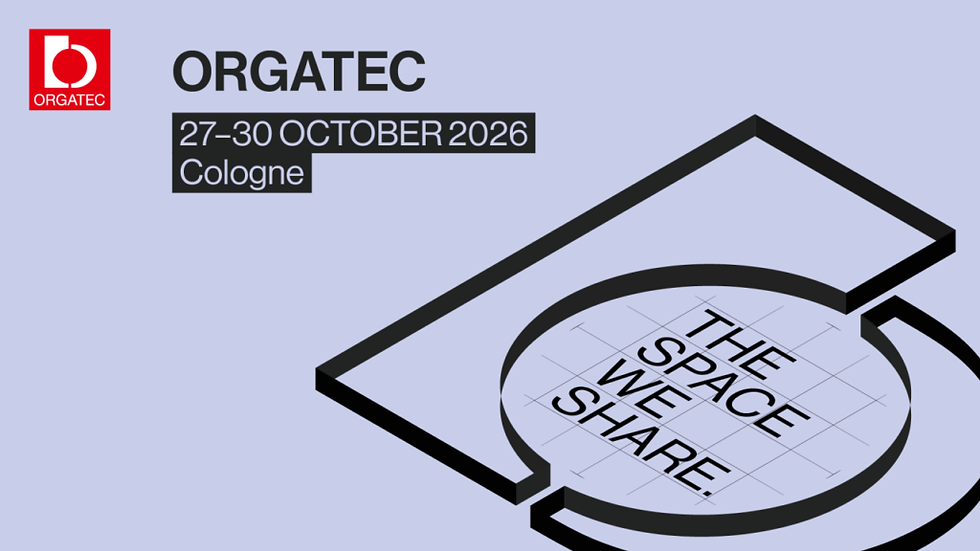
ORGATEC 2026 will take place from 27 to 30 October 2026 at Koelnmesse in Cologne, Germany. Organised by Koelnmesse GmbH, the biennial international trade fair focuses on workspace and contract solutions, bringing together furniture brands, manufacturers, designers, architects, planners and professional buyers.
For furniture buyers, ORGATEC 2026 is worth watching for a reason that goes beyond office furniture. The fair is increasingly relevant to the wider contract market, where workplaces, hospitality spaces, lounges, meeting areas and other commercially used interiors are becoming more flexible, comfortable and human-centred.
The 2026 central theme, “From Rooms to Relationships: Designing Spaces in an Ever-Changing World,” reinforces this shift. It puts people, interaction and adaptability at the centre of space design.
For purchasing managers and product managers, however, there is another question behind every new design idea:
Can this idea become a commercially reliable furniture product?
That is the question this article explores.
ORGATEC 2026 at a Glance
Before looking at furniture trends, here are the essential facts buyers should know.
ORGATEC 2026 Information | Details |
Event | ORGATEC 2026 |
Dates | 27–30 October 2026 |
Location | Cologne, Germany |
Venue | Koelnmesse |
Organiser | Koelnmesse GmbH |
Frequency | Biennial |
Focus | Workspace and Contract Solutions |
Visitor opening hours | 09:00–18:00 daily |
2026 central theme | From Rooms to Relationships: Designing Spaces in an Ever-Changing World |
Main relevance for furniture buyers | Workspace furniture, contract furniture, commercially used interiors, materials, flexible space solutions and related technologies |
The official product scope extends beyond conventional desks and office chairs. It includes furnishing for offices, facilities, institutions and commercially used properties, alongside interior solutions, acoustic products, lighting, conference technology and other elements used to create professional environments.
This broader scope is important.
ORGATEC 2026 should therefore not be viewed simply as an office furniture show. For professional furniture buyers, it is also a place to observe how contract furniture is responding to changes in the way people work, meet, eat, wait, collaborate and socialise.
What Is Different About ORGATEC 2026?
ORGATEC 2026 is giving clearer visibility to two areas: Workspace Solutions and Contract Solutions.
Workspace Solutions focuses on the changing world of work, while Contract Solutions broadens the discussion towards professionally used spaces and interiors.
The distinction matters because the boundaries between different furniture categories are becoming less rigid.
A modern office lounge may look more like a hotel lobby than a traditional workplace.
A hotel lobby may serve simultaneously as a waiting area, informal meeting point and temporary workspace.
A restaurant chair may use residential-inspired upholstery while still needing the durability expected from furniture used repeatedly in a commercial environment.
This convergence means buyers increasingly need products that balance design, comfort, flexibility and commercial durability.
ORGATEC 2026 provides a useful lens through which to examine that change.

“From Rooms to Relationships”: Why the 2026 Theme Matters
For the first time, ORGATEC is organising the event around a central theme: “From Rooms to Relationships: Designing Spaces in an Ever-Changing World.”
The idea responds to several changes affecting workplaces and contract environments, including digitalisation, hybrid working, sustainability and changing expectations around collaboration.
Its central argument is straightforward: professional spaces should no longer be considered only as functional rooms. They increasingly need to support interaction, connection and changing patterns of use.
For furniture buyers, I think this can be translated into a very practical purchasing question:
Instead of asking only “What furniture fits this room?”, ask “How will people actually use this furniture?”
That small change in thinking affects product selection.
How long will someone sit on the chair?
Will it be moved frequently?
Does the space change function during the day?
Will the upholstery need frequent cleaning?
Does the chair need to swivel?
Should it return automatically to its original position?
Can the same product family work across dining, meeting and lounge environments?
These questions move furniture purchasing away from appearance alone and towards real use scenarios.
Five Furniture Trends Buyers Should Watch Around ORGATEC 2026
ORGATEC is valuable because it provides a concentrated view of how professional interiors are evolving. Buyers should not simply look for the newest shapes or colours; they should look for changes that may influence future product specifications.
1. Flexible Furniture for Flexible Spaces
Flexibility is becoming one of the defining requirements of modern commercial interiors.
A room that once had one fixed purpose may now need to support meetings, individual work, informal conversations, dining or events at different times.
Furniture therefore needs to respond.
For seating, useful functions may include 180° or 360° swivel mechanisms, auto-return functions, movable structures and modular configurations.
An auto-return swivel chair is a good example of the difference between a feature and its business value.
The feature is simple: the chair rotates and returns towards its original position.
The potential value is broader. In a restaurant, meeting area or hospitality environment, chairs returning to a consistent position can help maintain a more orderly appearance.
For buyers, the correct question is therefore not:
“Does this chair swivel?”
It is:
“Does the swivel function improve the way the product is used?”
That distinction prevents unnecessary features from becoming unnecessary cost.
2. Comfort Is Becoming More Important Across Contract Furniture
Ergonomics is often associated with task chairs, but comfort matters far beyond the traditional office.
Dining chairs, meeting chairs and lounge seating all interact with the human body.
Buyers should therefore evaluate details such as:
seat height and depth
backrest angle and support
foam construction
armrest position
upholstery tension
fabric breathability
For certain upholstered seating designs, pocket spring construction can also provide a different sitting experience from conventional foam-only seating.
The important point is not that one construction is universally better.
The correct specification depends on the intended user, target price, expected sitting duration and market positioning.
A chair designed for a short meeting does not have exactly the same comfort requirements as seating intended for a restaurant where guests may remain for considerably longer.
For professional buyers, comfort should be treated as part of the product specification rather than an abstract feeling.
3. Contract Furniture Must Combine Appearance with Durability
One of the easiest mistakes at a furniture fair is to judge a product mainly by how it looks under exhibition lighting.
Commercial success happens somewhere else.
It happens after the chair has been moved hundreds of times.
After the fabric has been cleaned repeatedly.
After cartons have travelled through an international supply chain.
And after hundreds or thousands of units need to look and perform consistently.
This is why contract furniture buyers should look beneath the surface.
For an upholstered dining or contract chair with a metal frame, buyers may need to consider the frame structure, welding consistency, powder-coated finish, upholstery construction and relevant stability and durability testing.
Fabric deserves particular attention.
Colour and texture influence the first impression, but B2B buyers may also need to evaluate abrasion resistance, colour fastness, breathability, stain resistance and cleaning requirements, depending on the intended application.
In our own work at ASKT, fabric testing and material selection have become an important part of dining chair development. We have learned that upholstery is not simply decoration; it affects appearance, comfort, maintenance and long-term customer satisfaction.
The broader purchasing principle is simple:
Design creates interest. Consistent performance creates repeat business.
4. Modular Thinking Could Reduce Product Complexity
Another idea worth watching at ORGATEC 2026 is modularity.
Modularity does not necessarily mean making furniture visually technical or complicated. From a buyer's perspective, it can mean designing several commercial products around shared components.
Consider one successful upholstered seat shell.
Instead of developing an entirely new chair for every variation, that shell might be combined with several compatible bases:
fixed metal legs
swivel base
auto-return swivel base
alternative frame finishes
Different fabrics and colours can then create further variations.
This approach can potentially help buyers manage familiar sourcing problems such as SKU proliferation, fragmented MOQ, inventory complexity and repeated development work.
ASKT has been exploring this logic through its KINEXA modular approach, in which compatible seat and base options are considered as a coordinated product system.
The principle is more important than the system name:
More product choice does not always need to create more supply-chain complexity.
For European wholesalers, retailers and contract buyers, that is a useful idea to consider when viewing new collections in Cologne.
5. Sustainability Is Becoming a Whole-Product Question
Sustainability will remain an important topic around workplace and contract interiors, but professional buyers should look beyond a simple “green material” label.
A more useful sourcing assessment considers the complete product.
Start with materials, but continue with questions such as:
How durable is the product?
Can unnecessary plastic packaging be reduced?
Can the carton size be optimised?
Can a KD structure improve container loading?
Can damaged parts be reduced through better packaging?
Does the product architecture create unnecessary inventory?
These factors connect sustainability with commercial efficiency.
For example, reducing plastic in packaging can support environmental objectives, but packaging still has to protect the furniture properly during international transport.
Similarly, a KD structure can improve shipping efficiency, but only if the assembly method remains stable, practical and appropriate for the product.
At ASKT, we have been working with reduced-plastic packaging approaches, including honeycomb paper protection where appropriate, while also paying attention to the basic purpose of packaging: ensuring that furniture reaches the buyer in good condition.
Sustainable sourcing works best when environmental improvement and operational efficiency support each other rather than compete.
What Should Furniture Buyers Look Beyond the Exhibition Stand?
ORGATEC 2026 will provide inspiration, but a trade fair stand cannot answer every sourcing question.
Once a buyer finds an interesting chair, table or furniture system, the next step should be deeper evaluation.
A practical buyer should ask:
About the product: Who is the intended user? How long will the product normally be used at one time? Which functions genuinely add value?
About quality: How is stability evaluated? What durability requirements apply? How are frames, welds, upholstery and mechanisms controlled?
About customisation: Which fabrics, colours, frames and dimensions can be changed? What effect will customisation have on MOQ and cost?
About logistics: Is the product assembled or KD? What are the carton dimensions? How many units can be loaded efficiently? Is the packaging designed around real transport risks?
About the supplier: Is this product within the manufacturer's real area of expertise? Can the supplier explain its QC process clearly? Can samples be developed and tested before bulk production?
These questions help buyers distinguish between an attractive exhibition product and a commercially reliable sourcing programme.
From Exhibition Trend to Sourcing Decision
The difficult part of furniture purchasing often begins after the exhibition.
Imagine that a buyer sees a chair in Cologne with a warm residential look, comfortable upholstery and an auto-return swivel base.
The initial reaction might be:
“This could work in our collection.”
That is only the beginning.
The buyer then needs to translate the idea into a specification:
What seat height suits the target dining tables?
Which fabric works for the intended market?
What abrasion performance is required?
Can the base finish match the rest of the collection?
What is the MOQ per colour?
Can the chair be packed efficiently?
Does the swivel mechanism meet the required durability expectations?
What target price can the final specification support?
This is where trend awareness becomes product development.
And it explains why supplier capability matters.
A useful manufacturing partner should not simply say, “Yes, we can make it.”
The supplier should be able to discuss trade-offs.
A thicker frame may influence weight and cost. A different upholstery construction may affect comfort and packing volume. A new fabric colour may affect MOQ. A fully assembled structure may simplify customer assembly but reduce container efficiency.
Good sourcing decisions are rarely about maximising one specification.
They are about finding the right balance.
Why ORGATEC 2026 Matters to European Furniture Buyers
ORGATEC 2026 matters because the contract furniture market is increasingly connected to wider changes in how people use space.
Workplaces are becoming more flexible.
Hospitality influences workplace design.
Residential aesthetics influence contract furniture.
Comfort expectations are rising.
Sustainability increasingly reaches beyond materials into packaging, logistics and product life.
For furniture buyers, these changes create new opportunities, but also more complex purchasing decisions.
The strongest products will therefore not necessarily be those with the longest feature list.
They are more likely to be products where design, comfort, durability, flexibility, logistics and commercial positioning work together.
That is what buyers should be watching in Cologne.
FAQ About ORGATEC 2026
When is ORGATEC 2026?
ORGATEC 2026 will be held from 27 to 30 October 2026.
Where will ORGATEC 2026 take place?
ORGATEC 2026 will take place at Koelnmesse in Cologne, Germany.
What is ORGATEC?
ORGATEC is a biennial international trade fair focused on workspace and contract solutions. It brings together companies and professionals involved in furniture, workplace planning, commercially used interiors, technology and related design solutions.
Who organises ORGATEC 2026?
ORGATEC 2026 is organised by Koelnmesse GmbH.
What is the theme of ORGATEC 2026?
The 2026 central theme is “From Rooms to Relationships: Designing Spaces in an Ever-Changing World.” It focuses on people, interaction and the need for workplace and contract environments to adapt to continuous change.
Is ORGATEC 2026 only relevant to office furniture buyers?
No. Office and workspace solutions remain important, but ORGATEC also addresses contract environments and commercially used interiors. This makes the fair relevant to buyers interested in seating, hospitality-influenced interiors, meeting areas, lounges and other contract furniture applications.
What should furniture buyers pay attention to at ORGATEC 2026?
Furniture buyers should look beyond visual trends and evaluate comfort, flexibility, structural durability, materials, modularity, sustainability, customisation, packaging and commercial scalability.

Conclusion
ORGATEC 2026 will take place from 27 to 30 October 2026 at Koelnmesse in Cologne, bringing the international furniture, design and contract community together around the future of workspace and professionally used interiors.
For furniture buyers, however, the value of the event should go beyond discovering what looks new.
The more important task is understanding why furniture is changing.
Flexible spaces are increasing demand for adaptable products. Human-centred design is putting greater attention on comfort. Contract applications require buyers to balance aesthetics with durability. Sustainability is expanding from material selection into packaging, logistics and product life. Modular thinking may also offer new ways to create product variety without multiplying supply-chain complexity.
These are not only exhibition trends. They are purchasing questions.
At ASKT, we follow developments such as ORGATEC because they help us understand where European furniture requirements are heading. With more than 20 years of furniture industry experience, our focus is on translating market ideas into practical dining chairs, dining tables and related seating solutions, with attention to comfort, structural stability, materials, customisation, testing and shipping efficiency.
We are not exhibiting at ORGATEC 2026, but we are watching the same changes that European furniture buyers are watching.
For buyers exploring new ideas in Cologne, the most useful question may therefore be the one asked after the exhibition:
How can this idea become a product that customers want, retailers can sell, and the supply chain can reliably deliver?
That is where a furniture trend becomes a sourcing decision.


Comments