


What is the Difference Between Dining Chairs Made of Genuine Leather and Faux Leather?
- Sunbin Qi

- Aug 26, 2025
- 5 min read
A Comprehensive Guide for B2B Buyers
Introduction
For professional furniture buyers, procurement managers, and distributors, choosing the right materials for dining chairs is a decision that carries significant business impact. The material you select affects not only the end-customer’s satisfaction but also long-term maintenance costs, brand perception, and compliance with evolving sustainability regulations.
Among the most discussed material options in the dining furniture market are genuine leather and faux leather. Both materials have unique advantages and limitations that affect cost structures, durability, customer demand, and supply chain logistics.
This article provides a detailed B2B comparison of genuine leather and faux leather dining chairs, helping buyers make informed choices that align with their business goals.
1. Understanding the Materials
Genuine Leather
Genuine leather is derived from animal hides, typically cowhide, which undergoes a tanning process to prevent decomposition and enhance durability. It is prized for its natural look, soft texture, and ability to age with character. Each piece of genuine leather is unique, with slight variations in grain and tone.
For centuries, genuine leather has been associated with luxury, prestige, and craftsmanship. In the furniture industry, it is used in high-end dining chairs that target consumers seeking long-lasting value.
Key characteristics of genuine leather:
Natural material with unique grain patterns
Ages to develop a patina over time
Highly breathable, regulating temperature better than synthetic alternatives
Requires conditioning and maintenance to retain flexibility
Faux Leather
Faux leather, often referred to as PU leather, vegan leather, or synthetic leather, is made from a fabric base coated with polyurethane (PU) or polyvinyl chloride (PVC). It is engineered to imitate the appearance and feel of genuine leather while offering cost-efficiency and versatility.
Over the past decade, innovations in textile technology have dramatically improved the look, texture, and durability of faux leather. Today, high-quality versions can closely resemble real leather while providing advantages in terms of price, sustainability, and ease of care.
Key characteristics of faux leather:
Consistent texture and appearance across production batches
Available in a wider range of colors and finishes
Easy to clean and resistant to stains
Lower cost and higher availability
Traditionally less breathable, though innovations have improved comfort

2. Key Differences Between Genuine Leather and Faux Leather Dining Chairs
Below is a side-by-side comparison table highlighting the most important differences for B2B decision-makers:
Category | Genuine Leather Dining Chairs | Faux Leather Dining Chairs |
Durability & Lifespan | Extremely durable; can last decades; develops a natural patina | Good durability; prone to peeling or cracking over time, though modern coatings improve performance |
Cost | High raw material and processing costs; positioned as premium | More affordable; lower production and retail costs |
Aesthetic Appeal | Unique natural grain; luxurious and authentic | Consistent appearance; available in more colors, finishes, and patterns |
Customization | Limited (due to natural material variation) | Highly customizable; suitable for bulk uniform orders |
Maintenance | Requires conditioning; sensitive to stains, oils, and humidity | Easy to clean; stain-resistant, waterproof, and pet-friendly |
Sustainability | By-product of meat industry but involves chemical tanning | Traditionally plastic-based; sustainable options (recycled materials) increasingly available |
Customer Perception | Viewed as luxurious, prestigious, and timeless | Seen as affordable, practical, and increasingly eco-friendly |
Market Fit | Best for premium/luxury markets | Ideal for mass-market, trend-driven, and eco-conscious markets |

a) Durability and Longevity
Genuine Leather: Known for its resilience, genuine leather can last for decades when properly maintained. Its fibers are naturally strong, and over time, it develops a patina that many consumers find appealing. However, it can be sensitive to humidity, sunlight, and stains.
Faux Leather: While it does not age in the same way as genuine leather, modern faux leathers are designed with scratch resistance, waterproof coatings, and color fastness. Still, they may eventually crack or peel after years of heavy use.
B2B Insight:For markets where longevity and prestige are selling points, genuine leather has the advantage. For fast-moving consumer markets where trends change quickly, faux leather provides sufficient durability while keeping costs down.
b) Cost Considerations
Genuine Leather: Due to raw material scarcity and complex processing, genuine leather is significantly more expensive. This translates into higher retail prices but also an association with luxury.
Faux Leather: Production costs are lower, making faux leather dining chairs more affordable and allowing for greater pricing flexibility.
B2B Insight:Faux leather is well-suited to volume sales and entry-to-mid-market collections, while genuine leather remains best positioned for premium, niche markets.
c) Aesthetic Appeal and Customization
Genuine Leather: Offers a natural, timeless elegance. Each piece has subtle differences in tone and grain, appealing to consumers who value authenticity and exclusivity.
Faux Leather: Offers greater consistency, making it easier to standardize across large orders. It can be produced in a wide variety of colors, textures, and finishes, including metallic and patterned options.
B2B Insight:For large-scale procurement requiring uniformity, faux leather offers clear advantages. Genuine leather suits bespoke collections and high-value consumers seeking uniqueness.

d) Maintenance and Practicality
Genuine Leather: Requires specialized cleaning and conditioning to prevent drying, cracking, or staining. It is sensitive to liquids and oils.
Faux Leather: Much easier to clean and maintain, typically requiring just a damp cloth. Many modern faux leathers are waterproof, stain-resistant, and pet-friendly, meeting practical demands in everyday use.
B2B Insight:Faux leather reduces the burden of after-sales service and returns, especially in family and hospitality markets where spills and heavy use are common.
e) Sustainability and Compliance
Genuine Leather: As a by-product of the meat industry, it helps reduce waste but still relies on chemically intensive tanning processes, which may conflict with stricter eco-regulations.
Faux Leather: Traditionally derived from plastics, but significant progress has been made in eco-friendly alternatives. For example, fabrics made from recycled plastic bottles are now entering the furniture market.
B2B Insight:With rising European plastic taxes and green compliance standards, faux leather integrated with sustainable solutions can strengthen a retailer’s environmental positioning.
f) Customer Perception
Genuine Leather: Associated with heritage, craftsmanship, and prestige. Buyers who see furniture as an investment gravitate toward it.
Faux Leather: Increasingly popular among eco-conscious and price-sensitive consumers. Younger demographics often prefer sustainable or vegan options when presented with clear certifications such as OEKO-TEX® STANDARD 100.
3. Business Implications for Furniture Buyers
Market Positioning
Premium Market: Genuine leather chairs reinforce a brand’s luxury identity.
Mid to Mass Market: Faux leather chairs offer affordability, faster turnover, and scalability.
Risk and Quality Control
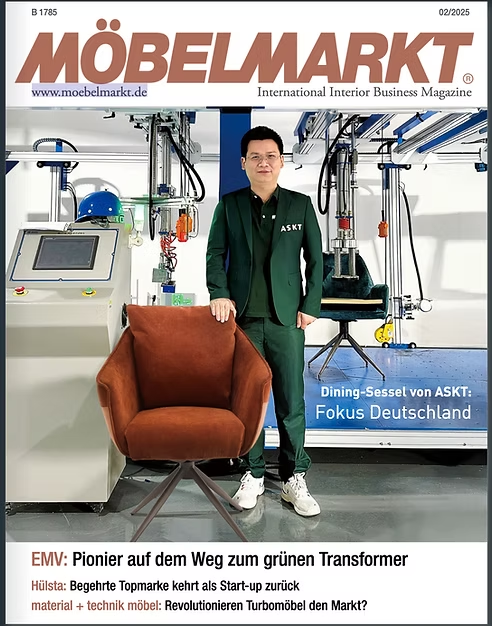
Furniture buyers need to mitigate risks related to product defects and compliance failures. ASKT’s ISO9001-certified processes and 12 specialized testing procedures ensure both genuine and faux leather chairs meet international standards.
Logistics and Packaging
Eco-conscious logistics are increasingly part of the decision-making process. ASKT’s zero-plastic packaging program not only reduces compliance risks but also improves logistics efficiency by 30%. This provides retailers with both cost savings and stronger green marketing points.

4. Trends Driving the Leather vs. Faux Leather Decision
Sustainability Regulations in Europe – Encouraging retailers to source materials with low environmental impact.
Consumer Demand for Vegan Alternatives – Rising among younger demographics.
Customization and Design Flexibility – Faux leather allows wider creative possibilities in color and texture.
Durability Expectations – Higher-end markets still associate genuine leather with superior longevity.
5. A Buyer’s Checklist for Choosing Between Genuine and Faux Leather
When evaluating dining chair materials, consider:
Target Customer Segment – Luxury vs. affordability-driven.
Product Lifecycle – Long-term investment vs. short-term trend.
Compliance Requirements – Sustainability certifications and packaging standards.
Margin Strategy – Premium margins vs. high-volume sales.
After-Sales Service – Maintenance requirements and expected durability.
Conclusion
The decision between genuine leather and faux leather dining chairs is not about which is “better,” but rather about which best aligns with your business strategy, customer base, and compliance obligations.
Genuine leather remains the material of choice for prestige, craftsmanship, and long-lasting luxury.
Faux leather provides cost-efficiency, versatility, and eco-friendly advantages, making it the smarter choice for fast-moving and eco-conscious markets.
By combining strict quality testing, sustainable practices, and innovative design, ASKT ensures that both material options deliver on performance, safety, and customer satisfaction.
For B2B buyers, the most profitable strategy often involves balancing both materials across product lines — ensuring market coverage from luxury segments to volume-driven retail.


Comments