


How to Choose Commercial Bar Stools for Kitchen Islands, Cafés, and Hospitality Spaces
- Media ASKT

- 14 hours ago
- 13 min read

Commercial bar stools should be chosen based on use environment, seat height, frame durability, comfort, maintenance requirements, and visual consistency with the space. For kitchen islands, cafés, restaurants, hotels, bars, coworking lounges, and hospitality projects, the right bar stool is not only a seating product but also part of the operational experience. A suitable stool must support frequent use, match the counter height, remain stable under daily traffic, and fit the design language of the project.
For B2B buyers, the decision is different from buying residential bar stools. Commercial buyers need to consider bulk purchasing, long-term durability, cleaning efficiency, project lead times, replacement consistency, packaging, and supplier reliability. A bar stool that looks attractive in a showroom may not be suitable for a high-traffic café or hotel breakfast area if the structure, materials, and maintenance requirements are not built for commercial use.
This guide explains how to choose commercial bar stools for kitchen islands, cafés, and hospitality spaces from a practical procurement perspective. It covers product types, sizing, materials, comfort, safety, design coordination, and supplier evaluation.
What Is a Commercial Bar Stool?
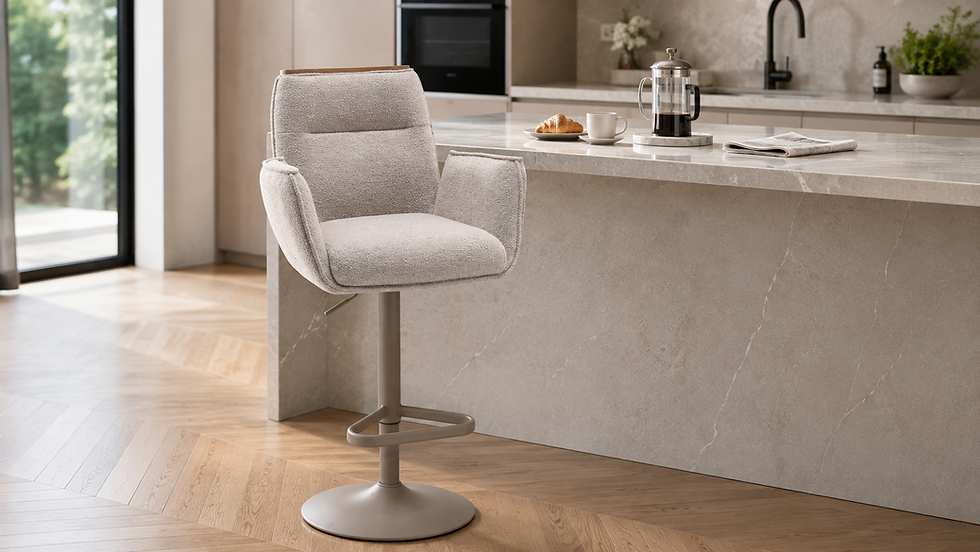
A commercial bar stool is a high-seat chair designed for use at bars, kitchen islands, counters, cafés, restaurants, hotels, event spaces, and other public or semi-public environments. Unlike typical home bar stools, commercial bar stools are expected to withstand more frequent sitting, movement, cleaning, and repositioning.
The main difference between residential and commercial bar stools is usage intensity. A home stool may be used a few times a day by the same people. A commercial stool may be used continuously by different customers, staff, guests, or tenants. This means the structure, joints, footrest, upholstery, finish, and base stability must be selected with long-term performance in mind.
A good commercial bar stool should meet three basic requirements: it should fit the counter height, support users comfortably, and remain durable under repeated use. If one of these factors is ignored, the stool may create operational problems, including customer discomfort, faster wear, frequent replacement, or inconsistent interior presentation.
Why Bar Stool Selection Matters in B2B Projects
Bar stools influence both customer experience and space efficiency. In cafés and hospitality interiors, seating affects how long guests stay, how easily staff can move through the space, and how cohesive the environment feels. In commercial kitchen islands or workplace hospitality areas, stools help define informal meeting zones, breakfast counters, lounge areas, and social spaces.
For procurement teams, bar stools are also a lifecycle-cost decision. A lower unit price may not be economical if the stool requires frequent repairs, stains easily, becomes unstable, or cannot be reordered in the same finish. B2B buyers should evaluate not only the purchase cost but also maintenance, replacement, shipping, assembly, and long-term availability.
In project-based procurement, consistency is especially important. Hotels, restaurant chains, serviced apartments, and café groups often need multiple batches across different locations. Choosing a supplier that can support repeat orders, stable specifications, and clear production communication can reduce future mismatch problems.
Key Factors When Choosing Commercial Bar Stools

Choose the Correct Seat Height
Seat height is the first technical factor to confirm. A stool that is too high or too low will make the counter uncomfortable, even if the design is attractive. For most commercial projects, buyers should measure the height from the floor to the underside or top surface of the counter before selecting the stool.
Counter-height stools are usually used for kitchen islands and casual dining counters. Bar-height stools are commonly used for raised bar counters in restaurants, pubs, hotels, and entertainment venues. The user should have enough legroom between the seat and the counter surface. A comfortable gap helps guests sit naturally and reduces pressure on the knees.
For mixed-use spaces, such as hotel lounges or coworking cafés, it is important to confirm whether the seating area is a counter, a bar, or a custom-built island. Custom counters may not follow standard dimensions, so measurement should always come before ordering.
Match the Stool Type to the Space
Different commercial environments require different stool structures. A backless stool may be efficient for a narrow bar area, while a full-back upholstered stool may be better for a hotel lounge or long-stay dining setting.
Backless stools save space and can often slide under the counter. They are suitable for fast-turnover cafés, compact kitchen islands, and casual bar areas. Low-back stools provide more support while keeping a clean visual line. Full-back stools offer better comfort for longer sitting periods and are often used in restaurants, hotel bars, and hospitality lounges.
Swivel stools can improve convenience in bars and social spaces, but they require stronger hardware and more maintenance attention. Fixed stools are usually simpler, more stable, and easier to manage in bulk projects. Stackable stools are useful for event spaces, flexible dining areas, and venues that need quick storage.
Select Durable Frame Materials
The frame determines the structural life of a commercial bar stool. Common frame materials include metal, solid wood, plywood, rattan, and mixed-material constructions. Each material has advantages depending on the target environment.
Metal frames are often preferred for high-traffic commercial areas because they provide strength, stability, and a modern appearance. Powder-coated metal can work well in cafés, bars, and casual dining spaces when the finish quality is suitable for frequent handling.
Wooden frames provide warmth and are popular in restaurants, boutique hotels, and hospitality spaces that need a softer interior tone. Solid wood stools can feel premium, while plywood designs may offer a more contemporary and cost-efficient option. Wood should be properly finished to resist stains, cleaning, and moisture exposure.
Rattan, cane, or woven details are often used in resort, coastal, Mediterranean, or lifestyle hospitality spaces. These materials create a relaxed visual identity, but buyers should check whether the construction is suitable for heavy use and easy cleaning.
Evaluate Seat Materials and Upholstery
Seat material affects both comfort and maintenance. In commercial settings, upholstery should be judged by durability, stain resistance, cleanability, and replacement practicality.
Faux leather and vinyl are common choices for restaurants, cafés, and bars because they are relatively easy to wipe clean. Fabric upholstery can provide a softer and more refined look, but it may require more careful maintenance and stain management. Wood, plastic, or molded seats are easier to clean and often work well in fast-turnover spaces.
For hospitality projects, the material should match the service level. A luxury hotel bar may need padded upholstered stools with a refined finish. A busy café may need simple, durable seats that can be cleaned quickly between customers. A workplace pantry or apartment kitchen island may need a balance of comfort, design, and maintenance efficiency.
Check Stability and Footrest Design
Stability is a core requirement for commercial bar stools. A stool with poor balance can feel unsafe, create customer complaints, or wear out quickly. The base width, frame geometry, leg connection, and floor contact points all affect stability.
Footrests are especially important because bar stools are taller than standard dining chairs. A strong footrest improves comfort and reduces pressure on the legs. It also prevents users from placing their feet on weaker frame parts. In commercial spaces, footrests should be reinforced because they receive frequent contact from shoes.
For metal stools, buyers should check the welding and connection points. For wooden stools, buyers should evaluate joint quality and frame reinforcement. For swivel stools, the rotating mechanism should feel smooth but controlled, with no looseness or wobbling.
Commercial Bar Stool Comparison Table
Selection Factor | Best Choice for Kitchen Islands | Best Choice for Cafés | Best Choice for Hospitality Spaces | B2B Buying Consideration |
Seat height | Counter-height stools | Counter or bar height depending on layout | Custom based on bar, lounge, or dining zone | Always confirm counter measurements before ordering |
Back style | Low-back or full-back | Backless or low-back for high turnover | Full-back or padded back for comfort | Match comfort level to expected sitting time |
Frame material | Wood, metal, or mixed materials | Metal, plywood, or durable wood | Solid wood, metal, upholstered, or woven styles | Choose materials based on traffic and maintenance |
Seat material | Upholstered, wood, or molded seat | Easy-clean vinyl, faux leather, or wood | Upholstery, leather-look materials, or premium finishes | Balance appearance with cleaning requirements |
Function | Fixed or swivel | Fixed, stackable, or lightweight | Fixed, swivel, or lounge-style | Avoid overcomplicated mechanisms if maintenance is limited |
Design priority | Home-like warmth and comfort | Efficiency, durability, brand identity | Guest experience and interior consistency | Ensure style can be repeated across future projects |
Maintenance | Moderate cleaning | Frequent cleaning | Professional cleaning standards | Ask about care instructions and replacement parts |
How to Choose Bar Stools for Kitchen Islands
Commercial kitchen islands appear in serviced apartments, showrooms, office pantries, residential developments, shared accommodation, and hospitality suites. These spaces need stools that feel comfortable and visually integrated but still meet commercial expectations.
The best bar stools for kitchen islands usually have a balanced design: not too bulky, not too fragile, and not too difficult to clean. Low-back stools are often a practical choice because they provide support without blocking sightlines across the island. Full-back stools may be suitable for premium apartment projects or hospitality suites where comfort is more important than visual minimalism.
Material selection should match the surrounding cabinetry, countertop, and flooring. Wood stools can soften stone or metal surfaces. Metal stools can support an industrial or modern design. Upholstered stools can make the island feel more inviting, but the fabric or leather-like surface should be selected with cleaning in mind.
For B2B buyers, the most important kitchen island questions are: What is the counter height? How much space is available per seat? Will the stools be used daily? Who will maintain them? These answers will guide the final specification more reliably than style preference alone.
How to Choose Bar Stools for Cafés

Café bar stools should support high turnover, easy cleaning, and efficient space planning. In many cafés, stools are used at window counters, communal tables, narrow bar counters, or small breakfast areas. The seating must be attractive enough to support the brand, but durable enough for repeated daily use.
Backless or low-back stools are common in cafés because they save space and allow quick movement. Lightweight stools can be helpful for flexible layouts, but they should still feel stable when customers sit down. Stackable designs may be useful for cafés that rearrange seating for events or cleaning.
Cleaning is a major factor in café stool selection. Spills, crumbs, and frequent customer movement are normal. Smooth seats, wipeable upholstery, and durable finishes can reduce daily maintenance time. Decorative materials should be used carefully if they are difficult to clean or likely to wear quickly.
A café buyer should also consider visual repetition. Multiple stools placed in a row create a strong design impression. If the finish, height, or construction varies across batches, the space may look inconsistent. Reliable supply and specification control are therefore important for café groups and multi-location operators.
How to Choose Bar Stools for Hospitality Spaces
Hospitality bar stools must combine comfort, durability, and brand presentation. Hotels, resorts, serviced apartments, restaurants, lounges, and event venues often use bar stools as part of a designed guest experience. In these spaces, seating is not only functional; it also communicates the quality level of the property.
For hotel bars and lounges, full-back or padded stools are often more suitable because guests may sit for longer periods. In resort or lifestyle hospitality spaces, woven, wood, or mixed-material stools can help create a relaxed atmosphere. In business hotels or modern restaurants, metal and upholstered designs may better support a clean, contemporary identity.
Hospitality buyers should pay close attention to long-term consistency. A hotel may need replacement stools years after the initial installation. A restaurant group may need the same model across multiple branches. A supplier’s ability to maintain stable specifications, finishes, and production quality can be as important as the first order price.
Comfort should also be assessed more carefully in hospitality spaces than in quick-service environments. Seat depth, back angle, cushion density, footrest position, and edge shape can all affect the guest experience. A beautiful stool that feels uncomfortable after ten minutes may not be suitable for premium hospitality use.
Material Guide for Commercial Bar Stools
Metal bar stools are suitable for modern cafés, industrial-style restaurants, bars, and high-traffic areas. They are often strong, easy to coordinate, and available in many finishes. Buyers should check the coating quality, welds, and floor protection.
Wooden bar stools are suitable for warm, natural, Scandinavian, rustic, and premium interiors. They can make a space feel more comfortable and less industrial. Buyers should check wood type, finish quality, joint structure, and moisture resistance.
Upholstered bar stools are suitable for restaurants, hotels, lounges, and long-stay areas. They provide comfort and a more refined look. Buyers should evaluate fabric durability, stain resistance, seam quality, and cleaning instructions.
Plastic or molded bar stools are suitable for casual cafés, outdoor-inspired interiors, education spaces, and budget-conscious projects. They are usually easy to clean and lightweight. Buyers should check stability, surface quality, and whether the appearance matches the project level.
Woven or rattan-style bar stools are suitable for resorts, lifestyle cafés, boutique hotels, and relaxed hospitality interiors. They offer strong visual character. Buyers should confirm whether the weaving material and frame are suitable for commercial traffic.
Comfort and Ergonomics in Commercial Bar Stools
Comfort is not only about cushioning. A well-designed commercial bar stool should support a natural sitting posture, provide stable foot placement, and allow easy entry and exit. Seat height, footrest position, back support, seat width, and edge shape all contribute to comfort.
For quick-use spaces, such as coffee counters or waiting areas, minimal cushioning may be acceptable. For dining, hotel bars, or social lounges, better back support and softer seating are usually needed. The longer the expected sitting time, the more important comfort becomes.
Buyers should also consider different user types. Commercial spaces serve people of different heights, ages, and body types. A stool that is too narrow, too slippery, or too difficult to climb onto may reduce the usability of the space. Stable construction and practical dimensions create a better experience for a wider range of guests.
Design Consistency and Brand Fit
Commercial bar stools should support the identity of the space. In B2B projects, furniture is often part of a larger visual system that includes tables, lighting, flooring, wall finishes, and brand colors. A stool should not be selected in isolation.
For a minimalist café, simple metal or molded stools may be appropriate. For a boutique hotel, upholstered or wood-frame stools may create a more refined impression. For a coastal resort, woven textures and natural finishes may support the design concept. For a modern apartment kitchen island, clean lines and neutral materials may be more suitable.
Design consistency also matters across locations. A chain café, restaurant group, or hotel brand may need the same or similar stool styles in different projects. Choosing a supplier with stable product lines and customization ability can help maintain brand consistency.
Procurement Checklist for B2B Buyers
B2B bar stool procurement should begin with technical requirements, not only style selection. Buyers should confirm the project type, counter height, quantity, target budget, delivery schedule, maintenance expectations, and installation environment before requesting quotations.
A practical procurement checklist should include seat height, total stool height, frame material, seat material, back style, footrest structure, finish color, packaging method, assembly requirements, MOQ, lead time, warranty terms, and replacement availability.
For larger projects, sample evaluation is useful. A sample allows buyers to check real comfort, finish quality, stability, color accuracy, and packaging quality before placing a bulk order. Photos can help with early screening, but physical testing is often more reliable for final approval.
Buyers should also clarify whether the supplier can support customization. Custom options may include frame color, upholstery material, wood finish, seat shape, logo details, packaging, or project-specific dimensions. However, customization should be balanced with lead time, cost, and future reorder needs.
Common Mistakes to Avoid
The most common mistake is choosing bar stools based only on appearance. A visually attractive stool may still fail in a commercial setting if it is unstable, difficult to clean, uncomfortable, or unsuitable for the counter height.
Another mistake is ignoring spacing. Too many stools at a counter can make the area uncomfortable and reduce the quality of the guest experience. Buyers should leave enough space for people to sit, turn, and move without crowding.
A third mistake is selecting residential-grade stools for commercial environments. Residential products may not be designed for heavy daily use, repeated cleaning, or frequent customer movement. For commercial projects, durability and maintainability should be part of the specification.
Finally, buyers should avoid unclear supplier communication. Missing information about materials, dimensions, packaging, production lead time, or after-sales support can create problems later. A clear product specification reduces procurement risk.
FAQ
What height should commercial bar stools be?
Commercial bar stool height should match the counter or bar height. Counter-height stools are generally used for kitchen islands and lower counters, while bar-height stools are used for taller bar counters. Buyers should measure the actual counter before choosing, because custom commercial interiors may not follow standard dimensions.
Are backless bar stools suitable for commercial spaces?
Backless bar stools are suitable for commercial spaces where space efficiency and quick turnover are important. They work well in cafés, narrow counters, and casual bar areas. For longer sitting periods, low-back or full-back stools usually provide better comfort.
What material is best for café bar stools?
The best material for café bar stools is usually easy to clean, durable, and consistent with the café’s brand style. Metal, plywood, wood, molded plastic, vinyl, and faux leather are common choices. The right option depends on traffic level, cleaning frequency, interior style, and budget.
Are upholstered bar stools practical for restaurants and hotels?
Upholstered bar stools can be practical for restaurants and hotels when the upholstery is selected for commercial use. They offer better comfort and a more premium appearance, but buyers should check stain resistance, seam quality, cleaning instructions, and replacement options.
Should commercial bar stools swivel?
Swivel bar stools are useful in bars, lounges, and social spaces where guests need easier movement. However, swivel mechanisms add complexity and may require more maintenance. Fixed stools are often simpler, more stable, and easier to manage in high-volume procurement.
How many bar stools fit at a kitchen island or counter?
The number of stools depends on counter length, stool width, armrest design, and desired comfort level. Buyers should allow enough space for each user to sit and move comfortably. Crowded seating may increase capacity but often reduces user experience.
What should B2B buyers ask suppliers before ordering bar stools?
B2B buyers should ask about dimensions, materials, weight capacity guidance, finish options, MOQ, lead time, packaging, assembly, warranty, customization, replacement parts, and reorder availability. Clear supplier answers help reduce project risk and improve long-term consistency.
What is the best bar stool for hospitality projects?
The best bar stool for hospitality projects is one that matches the interior concept, supports guest comfort, withstands frequent use, and can be maintained or reordered over time. Hotels and restaurants should prioritize comfort, durability, finish consistency, and supplier reliability.
Conclusion

Choosing commercial bar stools for kitchen islands, cafés, and hospitality spaces requires a balance of design, durability, comfort, and procurement practicality. The best stool is not simply the most attractive option; it is the one that fits the counter height, supports the intended user experience, withstands daily use, and remains easy to maintain.
For kitchen islands, buyers should focus on correct height, visual harmony, and everyday comfort. For cafés, the priority is usually space efficiency, cleanability, durability, and brand consistency. For hospitality spaces, comfort, finish quality, and long-term availability become more important.
A strong B2B purchasing decision starts with clear specifications. Before placing an order, buyers should confirm dimensions, materials, seat style, frame strength, cleaning needs, lead time, packaging, customization options, and reorder support. When these details are handled properly, commercial bar stools can improve both the function and the appearance of a project while reducing long-term replacement and maintenance problems.


Comments