


Flexible Furniture Design for Modern Living: B2B Sourcing and Manufacturing Guide

Flexible furniture design for modern living addresses changing urban spatial dynamics across Europe through modular dining furniture, flat-pack KD structures, and multi-functional seating ergonomics. For European furniture wholesalers, retail chains, and contract buyers, sourcing adaptable indoor collections lowers inventory risks, optimizes container loading for reduced logistics overheads, and provides end customers with durable, space-efficient dining and living solutions.
How Does Flexible Furniture Design Adapt to Modern Living Concepts?
Modern European housing formats in urban centres across Germany, the Netherlands, the UK, Poland, Switzerland, and Ireland increasingly prioritize multi-functional spaces over separate, single-purpose rooms. Dining spaces often serve multiple functions, transitioning between family meals, remote working desks, and social entertaining areas within a single day. Flexible furniture design for modern living is therefore a direct engineering response to these evolving residential patterns.
To meet modern living expectations, flexible furniture must balance compact footprints with structural comfort and visual appeal. European buyers require furniture that shifts between functional tasks without sacrificing stability or aesthetic refinement.
Key functional attributes demanded in modern flexible living spaces include:
Multi-Functional Ergonomics: Dining chairs engineered with ergonomic backrests and supportive pocket spring seating systems that remain comfortable during extended daily use.
Mobility and Accessibility: Swivel bases and 360-degree auto-return mechanisms that enable fluid movement in compact dining areas without dragging chair legs across floor surfaces.
Expandable and Compact Geometry: Extension dining tables, versatile dining benches, and modular dining furniture that adjust quickly to accommodate varying numbers of people.
Visual Balance and Durability: Lightweight metal frames protected by scratch-resistant powder coating, maintaining a clean visual profile in smaller rooms while delivering robust load-bearing stability.

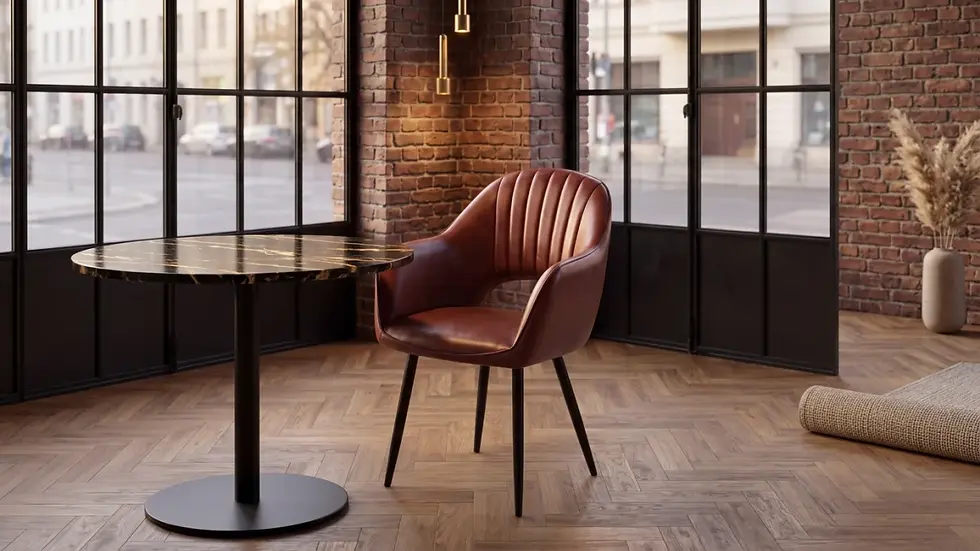
Modular chair components enable European retailers to configure diverse product SKUs from standardized parts.
Why Should European Retailers and Wholesalers Source Modular Dining Furniture?
For commercial furniture buyers, managing broad product catalogues against unpredictable consumer demand presents significant inventory risk. Traditional static furniture lines often require ordering distinct, pre-assembled chairs for every combination of upholstery fabric, shell design, and leg base. This practice ties up working capital in slow-moving stock keeping units (SKUs) and complicates warehouse management.
Modular dining furniture systems solve this commercial challenge by separating the seating shell from the frame base. Standardized mounting interfaces allow European retail buyers and purchasing groups to configure multiple distinct product variants from a shared pool of core parts.
Procurement Parameter | Traditional Rigid Sourcing | Modular Dining Furniture Sourcing | Commercial Value for European Buyers |
|---|---|---|---|
:--- | :--- | :--- | :--- |
SKU & Inventory Control | Every chair-base variation requires a separate dedicated SKU | Standardized seat shells pair with multiple interchangeable frame bases | Lowers inventory holding costs and simplifies stock management |
Container Loading Density | Irregular or fully assembled items consume excessive cargo volume | Flat, standardized packaging stacks tightly in shipping containers | Improves container space utilisation and lowers per-unit shipping costs |
Customization & Batch Size | Large minimum orders needed for each separate aesthetic variant | Shared component production allows flexible mix-and-match configurations | Facilitates agile product testing across different colours and fabrics |
After-Sales Support | Structural damage requires full unit replacement | Individual leg bases, swivel mechanisms, or shells can be replaced separately | Lowers post-sale service costs and customer return friction |
Assortment Adaptability | Introducing new styles requires extensive tooling and long lead times | New fabric options or leg profiles integrate onto existing shell platforms | Accelerates response times to changing European interior trends |
By adopting modular sourcing, commercial furniture importers can offer diverse catalogue selections while keeping baseline inventory lean, improving order turnaround, and maintaining healthy operational margins.
How Does KD Structure Furniture Sourcing Improve Logistics and Container Loading?
In international furniture procurement, shipping inefficiently packed cargo increases overall landed costs. Rigid, fully assembled dining chairs and large non-modular tables take up significant container space, resulting in low unit counts per shipping container and increasing the risk of transit damage during maritime export.
KD structure furniture sourcing (Knock-Down engineering) resolves this logistics bottleneck through precise structural engineering. A well-designed KD dining chair or table disassembles into flat, protected sub-assemblies that fit into compact cartons. This packing method maximizes container yield while ensuring fast, straightforward final assembly by warehouse teams or end consumers.

Durable, easy-clean fabrics combined with pocket spring cushions provide lasting comfort in compact living spaces.
Key manufacturing factors that ensure high-quality KD furniture include:
Precision Frame and Joint Engineering: Durable metal connection plates, pre-aligned mounting points, and reinforced screw housings prevent joint looseness or structural wobbling over time.
Consistent Manufacturing Tolerances: High-precision metal punching and automated production techniques ensure exact hole alignment across high-volume production batches, preventing assembly errors during customer setup.
Protective and Sustainable Packaging: Packaging optimization utilizing protective carton structures with reduced plastic content shields upholstery, powder-coated metal legs, and tabletop edges from vibration, shock, and moisture during export transport.
For European furniture wholesalers, shifting from assembled seating to precision KD structures substantially increases the number of units that can be loaded into a standard 40-foot High Cube (40HQ) container. This reduction in per-unit freight expense provides a significant commercial advantage in price-sensitive European markets.
What Materials Ensure Long-Term Durability in High-Use, Multi-Functional Furniture?
Furniture deployed in compact modern living environments undergoes frequent multi-purpose use. When dining seating doubles as a home workstation and daily family gathering space, standard residential materials can experience premature wear, upholstery stains, and structural fatigue. Sourcing specialists must verify material specifications that balance long-term durability with ease of maintenance.
Essential material specifications for modern flexible furniture include:
High-Performance and Easy-Clean Fabrics: Upholstered collections benefit from waterproof, stain-resistant, and easy-clean fabrics that prevent liquids from penetrating deep into the cushion core. Dense textile weaves with proven abrasion resistance and pet-friendly properties resist claw snags and surface wear while maintaining a soft tactile feel.
Colour Fastness and Safety: High colour fastness ratings prevent fading caused by daily sunlight exposure in bright apartment living rooms, while tested materials ensure compliance with European indoor safety standards.
Pocket Spring and High-Density Seating Cores: Integrating pocket spring seating with resilient foam layers prevents seat cushion sagging over time, distributing pressure evenly to support proper seating ergonomics during extended work or dining sessions.
Durable Metal Frames and Powder Coating: Steel and metal-frame bases treated with durable powder coating finishes resist scratching, scuffing, and corrosion from regular daily movement across varied floor surfaces.
Resilient Tabletop Surfaces: Sintered stone and calibrated oak veneer surfaces provide heat resistance, scratch resistance, and low liquid absorption, making them well-suited for multi-use dining and desk applications.

Engineered KD packaging maximizes container volume utilization and protects furniture components during export transport.
What Is an Effective Flexible Furniture Sourcing Strategy for European Importers?
Establishing a resilient, profitable furniture line requires an organized flexible furniture sourcing strategy that balances design development, quality control, and supply chain reliability. European procurement managers should evaluate overseas manufacturing partners across several practical production phases.
1. Supplier Evaluation and Manufacturing Capability
Assess the supplier's specialized manufacturing history and dedicated export experience within European markets such as Germany, the UK, and the Benelux region.
Review the manufacturer's quality control protocols, production consistency, and capacity for both high-volume output and flexible batch customization.
Verify the supplier's knowledge of European structural performance criteria, durability benchmarks, and relevant EN testing frameworks for domestic seating and tables.
2. Engineering Verification and Sample Development
Examine pre-production samples to evaluate joint rigidity, swivel mechanism smoothness, auto-return functionality, and upholstery stitch consistency.
Conduct carton packaging inspections to confirm that KD flat packs withstand transit stress while utilizing sustainable packaging designs with reduced plastic use.
Verify precise component fit across modular seating shells and interchangeable leg bases to ensure seamless assembly in target markets.
3. Production Quality Control and Supply Chain Consistency
Implement structured quality control checks throughout production, inspecting metal welding, powder-coat finish adhesion, upholstery alignment, and dimensional accuracy.
Confirm clear labeling, barcoding, and private-label packaging details prior to export staging.
Coordinate container loading plans to optimize volume utilization, protect cargo integrity, and minimize per-unit freight overheads.
How Can European Brands Scale with a Space Saving Furniture OEM Partner Like ASKT?
Working with an experienced space saving furniture OEM manufacturer enables European wholesalers, retailers, purchasing groups, and contract buyers to turn market demand into dependable, profitable product collections. ASKT brings over 20 years of dedicated industry experience as a professional B2B furniture manufacturer and supply chain partner based in China, focusing on indoor furniture tailored to the European market.
ASKT provides comprehensive OEM and ODM support designed around professional procurement needs:
Customization Flexibility: Custom manufacturing across fabrics, colours, finishes, dimensions, and branding options, covering dining chairs, dining tables, bar chairs, lounge chairs, dining benches, coffee tables, and office desks.
Advanced Product Engineering: Extensive expertise in upholstered seating, metal frames, powder coating, pocket spring cushions, smooth swivel and auto-return mechanisms, extension tables, sintered stone tops, and oak veneer finishes.
Logistics and Packaging Optimization: Engineered KD structures and eco-conscious packaging solutions designed with reduced plastic to maximize container loading density and safeguard products during shipping.
Quality and Market Reliability: A solid track record of supply consistency, transparent quality control, and deep familiarity with European testing standards and consumer expectations across Germany, the Netherlands, the UK, Poland, Switzerland, and Ireland.
Whether your objective is developing an agile modular dining collection or expanding your commercial range with durable, space-saving designs, partnering with ASKT provides the technical expertise and supply chain stability necessary to grow your furniture portfolio.
FAQ
What are the primary commercial advantages of KD structure furniture sourcing for European retailers?
KD (Knock-Down) structure furniture sourcing significantly reduces carton volume compared to pre-assembled furniture. By packing chairs and tables in flat, compact cartons, importers can substantially increase unit loading capacity per 40HQ container, directly lowering per-unit ocean freight costs, reducing warehouse storage space requirements, and minimizing transit damage.
How does sourcing modular dining furniture reduce inventory risk for wholesalers?
Modular dining furniture systems standardize the connection points between seating shells and metal base frames. This allows buyers to offer a broad range of fabric colours, shell shapes, and leg configurations using a shared set of standardized base components, drastically lowering safety stock requirements and avoiding dead inventory.
Which material specifications are most critical for multi-functional flexible dining furniture?
Key material considerations include easy-clean, waterproof, and pet-friendly fabrics with high abrasion resistance, integrated pocket spring seating cores that resist sagging, scratch-resistant powder-coated metal frames, and non-porous tabletop surfaces such as sintered stone or calibrated oak veneer.
How does ASKT support OEM and ODM development for European furniture buyers?
ASKT offers end-to-end OEM and ODM customization across upholstery fabrics, frame finishes, dimensions, and private-label packaging. With over 20 years of manufacturing experience, ASKT combines European market understanding with optimized KD engineering, stable container loading, and transparent quality control.


Comments