


User-Oriented Furniture Development: B2B Sourcing and Engineering Guide for the European Market

User-oriented furniture development prioritises real household living habits, spatial flow, and structural durability over short-lived aesthetic trends to minimise sourcing risk and deliver lasting commercial value. By engineering dining chairs, dining tables, and seating collections around functional ergonomics, certified durability, knock-down logistics efficiency, and high-performance materials, European furniture importers, wholesalers, and retailers achieve lower return rates, optimized container utilization, and stable commercial margins.
Why Is Furniture Development Based on Customer Needs Essential for European B2B Buyers?
In competitive retail and wholesale environments across Germany, the Netherlands, the United Kingdom, Poland, Switzerland, and Ireland, product success depends on how well furniture performs in daily residential and commercial settings. Developing collections based solely on aesthetic styling seen at trade exhibitions frequently leads to commercial failure. When furniture is designed without accounting for how end consumers actually sit, clean, move, and utilize space, professional buyers face elevated return rates, customer complaints, and margin erosion.
User-oriented furniture development bridges the gap between visual design and real-world utility. Instead of treating furniture as a static decorative object, user-oriented engineering analyzes practical household touchpoints, ergonomic pressures, spatial dimensions, and logistics realities.
When furniture development based on customer needs is overlooked during the product development phase, European buyers routinely face four major commercial challenges:
High Return Rates from Ergonomic Discomfort: Chairs that look appealing in digital catalogues or showroom displays often cause posture fatigue during extended dining or work-from-home sessions if lumbar support, seat depth, and cushioning density are poorly calibrated.
Excessive Transit and Storage Costs: Non-optimized frame geometry and bulky pre-assembled components increase carton volumes, reducing container loading efficiency and inflating sea freight and warehousing costs per unit.
Premature Material Degradation: Fabrics and surface finishes chosen without verifying abrasion resistance, colour fastness, or stain resistance deteriorate quickly under daily domestic friction, pet interactions, and liquid spills.
Assembly Friction and Freight Damage: Inadequately engineered knock-down (KD) joints, missing component tolerances, or fragile packaging result in damaged goods upon arrival and frustrating end-user assembly experiences.
By grounding OEM furniture product development in concrete user requirements, sourcing teams eliminate these vulnerabilities before entering mass production.

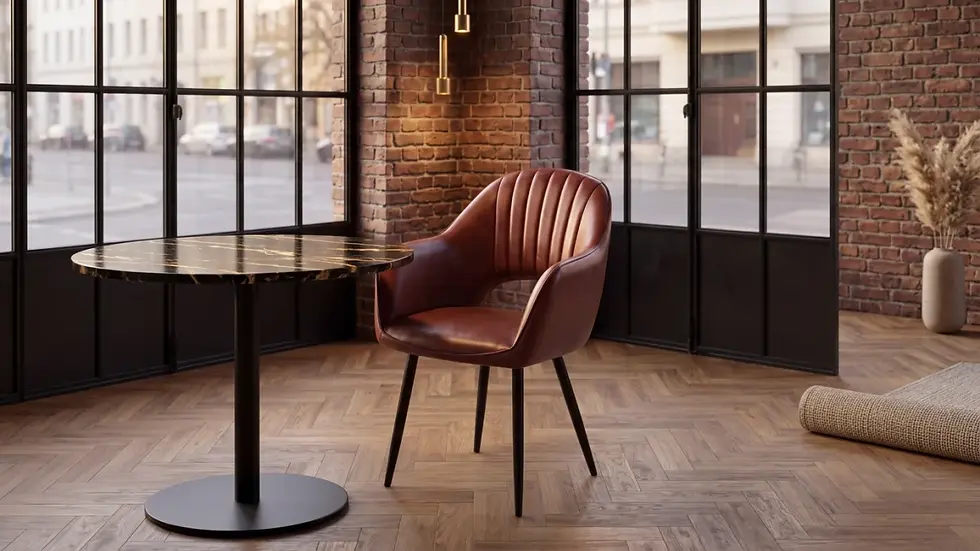
Developing furniture based on customer needs starts with precise dimensional alignment, ergonomic backrest angles, and seat height optimization.
How Do Everyday Household Living Habits Shape Dining Chair Design for the European Market?
European living spaces, particularly urban apartments and open-plan homes, demand multi-functional furniture. Dining areas are no longer reserved strictly for evening meals; they serve as temporary home offices, homework stations, and social gathering zones. Consequently, dining chair design European market collections must accommodate continuous sitting periods and dynamic physical movement.
1. Seating Ergonomics and Multi-Layer Comfort Construction
Standard commercial foam seating often suffers from gradual compression fatigue, resulting in sagging cushions and loss of support over time. To address this, user-oriented dining chair development incorporates advanced multi-layer seating constructions, such as integrated pocket spring seating cores combined with high-resilience foam layers.
Pocket Spring Cores: Individual pocket springs adapt dynamically to body weight distribution, relieving pressure on the sciatic nerve and maintaining structural shape over years of daily use.
High-Resilience Foam Layers: Surrounding foam padding provides initial surface softness while preventing the seat from bottoming out against the structural metal or plywood sub-frame.
Backrest Angles and Lumbar Curves: Ergonomically calibrated backrests featuring a 100 to 105-degree recline angle offer balanced support for both upright dining and relaxed conversation.
2. Functional Movement: Swivel and Auto-Return Mechanisms
In compact dining spaces, pulling heavy dining chairs in and out can damage sensitive flooring and cause physical strain. Integrating 360-degree swivel mechanisms with automatic return functions solves this spatial challenge.
Effortless Entry and Exit: Users can turn smoothly away from the dining table without dragging the chair legs across parquet, laminate, or tiled floors.
Visual Order: The auto-return mechanism automatically re-aligns the chair seat parallel to the table edge once the user stands up, keeping dining areas neat in residential and hospitality environments.
3. Dimensional Compatibility with Dining Tables
User-focused engineering requires precise dimensional alignment between dining chairs and dining tables. European standard dining tables typically feature top heights between 75 cm and 76 cm. Therefore, dining chairs must maintain a finished seat height between 48 cm and 50 cm, ensuring a comfortable 26 cm to 28 cm clearance between the seat surface and the underside of the tabletop or apron.
Functional Design Dimension | Common Design Failure | User-Oriented Engineering Solution |
|---|---|---|
:--- | :--- | :--- |
Seating Core | Low-density foam sagging after months of use | Multi-layer pocket spring system with high-resilience foam |
Spatial Mobility | Scraping rigid legs across hardwood floors | Smooth 360-degree swivel mechanism with auto-return alignment |
Table Integration | Incompatible seat heights causing leg or wrist strain | Standardized 48-50 cm seat height matched to 75-76 cm table heights |
Floor Protection | Hard plastic glides leaving surface scratches | Floor-appropriate glides engineered for European parquet and tile |
Spatial Flow | Oversized armrests colliding with table aprons | Low-profile or tapered armrests designed to slide neatly under tabletops |
What Technical and Material Factors Drive Successful OEM Furniture Product Development?
Executing successful OEM furniture product development requires deep manufacturing expertise across metal fabrication, surface treatments, upholstery engineering, and tabletop materials. European B2B buyers require complete consistency across production batches, rigorous durability testing, and compliance with structural safety expectations.
1. Metal Frame Engineering and Surface Pretreatment
Metal frames represent the structural backbone of modern contemporary dining chairs, bar chairs, and table bases. Achieving consistent strength across thousands of production units requires precision tooling and controlled welding processes.
Robotic and Precision Welding: Automated welding fixtures ensure complete weld penetration, smooth seams, and uniform dimensional stability across high-volume production runs.
Surface Pretreatment and Powder Coating: Metal tubing undergoes multi-stage degreasing, pickling, and phosphating before the application of electrostatic powder coatings. This prevents rust, withstands ambient humidity variations, and resists chipping during daily use and vacuum cleaner impacts.
Knock-Down (KD) Structural Integrity: KD frame joints utilize reinforced internal steel connecting plates and heavy-duty threaded bolts, providing rock-solid stability comparable to fully welded frames while drastically reducing carton volumes.
2. High-Performance Functional Upholstery
Dining room furniture faces frequent exposure to food spills, liquid accidents, pet friction, and ambient sunlight. Sourcing teams must specify fabrics that balance a pleasant, tactile hand-feel with robust commercial performance metrics.
Abrasion Resistance (Martindale): Upholstery fabrics intended for European dining environments must withstand intensive friction cycles without pilling, thread separation, or thinning.
Colour Fastness to Light and Rubbing: High-grade yarn-dyed fabrics prevent fading under direct window light exposure and eliminate dye transfer onto clothing under wet or dry friction.
Waterproof and Easy-Clean Performance: Advanced fabric treatments provide hydrophobic barriers that cause spilled liquids—such as water, coffee, or wine—to bead on the fabric surface, allowing effortless cleaning with a damp cloth before penetration occurs.
Pet-Friendly Durability: Dense, snag-resistant weave structures prevent pet claws from pulling structural loops, extending the aesthetic lifespan of the upholstery.
3. Tabletop Materials: Sintered Stone and Oak Veneer
Dining table development requires careful balancing of aesthetic elegance and surface resilience. Sintered stone and real oak veneer represent two of the most popular and commercially viable options for the European market.
Sintered Stone Tabletops: Formed under intense pressure and high temperatures, sintered stone surfaces offer zero porosity, exceptional scratch resistance, heat tolerance, and total stain resistance. They provide a sleek, modern aesthetic without the maintenance vulnerabilities of natural marble.
Oak Veneer on Engineered Substrates: Real oak veneer combined with high-density core boards delivers the organic warmth and natural grain patterns of solid wood while minimizing warping, cracking, and dimensional shifting caused by seasonal central heating and indoor humidity changes.

Rigorous mechanical testing verifies the long-term structural integrity of metal frames, KD joints, and pocket spring seating cores.
How Does a Furniture Sourcing and Development Strategy Optimize Packaging and Container Loading?
Logistics efficiency is a critical determinant of gross profit margins in cross-border furniture procurement. A comprehensive furniture sourcing and development strategy integrates packaging engineering and container load optimization directly into the initial product design phase.
1. Knock-Down (KD) Engineering for Volume Reduction
Pre-assembled chairs waste enormous volumes of container space by shipping trapped air. By engineering intelligent KD mechanisms—where chair seat shells detach cleanly from metal leg spiders or bases—manufacturers can pack multiple units into compact, stackable master cartons.
CBM Optimization: Transitioning from fully assembled chairs to optimized KD structures typically reduces packaging volume per chair by 40% to 60%, allowing buyers to fit significantly more units into a standard 40ft High Cube (40HQ) container.
Carton Dimension Standardization: Standardizing carton sizes across multiple chair models simplifies palletizing, warehouse racking, and parcel delivery across domestic European courier networks.
2. Sustainable Packaging and Transit Protection
European retail chains and e-commerce platforms operate under strict packaging waste regulations and corporate ESG mandates. Packaging must deliver maximum impact protection while systematically reducing single-use plastics.
Honeycomb Paperboard and Corrugated Edge Protectors: High-density honeycomb paperboards and reinforced corrugated corner protectors absorb drops and compression forces during transit, replacing bulky expanded polystyrene (EPS) foam.
Surface Cushioning: Non-abrasive, recyclable protective wraps shield delicate powder-coated metal legs, sintered stone edges, and upholstered shells from vibration chafing and moisture during sea freight.
Drop-Tested Packaging Standards: Master cartons undergo rigorous drop and vibration simulation tests to ensure products withstand rough courier handling and pallet transfer without structural or cosmetic damage.
Packaging Strategy | Traditional Packaging Approach | User-Oriented Logistics Optimization |
|---|---|---|
:--- | :--- | :--- |
Product Structure | Fully assembled or semi-assembled units | Precision Knock-Down (KD) structural engineering |
Container Fill Rate | Low unit density with high freight cost per piece | Maximized 40HQ container load density, lowering unit freight costs |
Packaging Materials | Heavy reliance on expanded polystyrene foam | Recyclable honeycomb paperboard and reduced plastic protection |
Parcel Courier Fit | Bulky, non-standard cartons causing oversize surcharges | Compact flat-pack carton dimensions optimized for European couriers |
Transit Protection | Minimal edge protection risking corner dents | Reinforced multi-layer edge guards and drop-tested master cartons |
How Can B2B Buyers Balance Product Customization with Supply Chain Efficiency?
European furniture importers, purchasing groups, and retail chains often face a critical operational trade-off: end consumers demand wide selections of colours, textures, and leg finishes, but maintaining unique structural frames for every variation ties up working capital and inflates inventory risks.
A modular OEM and ODM development strategy resolves this dilemma by decoupling universal structural components from customer-facing aesthetic elements.
1. Modular Frame and Base Standardization
By establishing a standardized mounting plate matrix across multiple dining chair seat shells, buyers can utilize identical metal leg bases across diverse product lines.
Shared Tooling and Lower MOQs: Standardized leg frames allow factories to produce structural metalwork in high volumes, reducing tooling costs and lowering minimum order quantities (MOQs) for individual shell designs.
Flexible Catalog Expansion: Product managers can launch fresh seasonal collections by simply introducing new upholstered shell profiles while utilizing existing, thoroughly tested metal leg frames.
Reduced Spare Parts Complexity: Standardized mechanical hardware and floor glides streamline after-sales support and replacement inventory management across retail networks.
2. Tailored Customization Options for OEM and ODM Lines
Working with an experienced manufacturing partner allows B2B buyers to customize products to suit specific brand positioning and regional market requirements:
Fabric and Upholstery Options: Tailor collections with textured bouclés, smooth velvets, woven chenilles, waterproof performance textiles, or faux leathers.
Metal Finishes: Select from matte black powder coating, textured anthracite, brushed champagne, or customized metallic finishes.
Table Dimensions and Extension Systems: Customize dining table lengths, edge profiles, sintered stone slab patterns, and smooth extension rail mechanisms for compact apartments or large family spaces.
Branding and Private Labeling: Implement customized woven fabric labels, branded carton printing, laser-etched metal badges, and bespoke assembly instruction manuals.

Intelligent knock-down engineering and sustainable honeycomb paperboard packaging maximize container loading efficiency and prevent transit damage.
What Sourcing Evaluation Checklist Should Professional Product Managers Use?
Before selecting a manufacturing partner for OEM or ODM furniture collections, purchasing managers, category heads, and sourcing specialists should execute a comprehensive operational audit to ensure the supplier possesses the technical capabilities, testing infrastructure, and quality control systems required for long-term commercial success.
Practical OEM Manufacturer Evaluation Checklist
Manufacturing Experience & Market Focus: Does the supplier demonstrate extensive experience in producing dining chairs, dining tables, and seating specifically for the European market?
Structural Durability and EN Testing Knowledge: Can the manufacturer conduct or coordinate rigorous structural strength, cyclic fatigue, and stability tests aligned with European standards for domestic and contract seating?
Welding & Metal Fabrication Precision: Does the production facility utilize automated or precision welding jigs and multi-stage powder coating pretreatment to prevent structural joint failures and paint peeling?
Upholstery & Foam Engineering: Are seat cushions constructed with durable high-resilience foam or integrated pocket spring systems to prevent long-term cushion sagging?
Fabric Quality & Safety Testing: Are upholstery materials thoroughly verified for Martindale abrasion resistance, colour fastness, tear strength, and absence of harmful chemical substances?
Knock-Down (KD) Logistics Design: Is the product engineered for optimal container loading and flat-pack courier shipping without sacrificing assembled frame rigidity?
Sustainable Packaging Practices: Does the supplier utilize recyclable corrugated materials, honeycomb paperboard, and reduced single-use plastics in compliance with European packaging waste standards?
Consistent Quality Control Protocols: Does the factory maintain clear incoming material inspections, in-line assembly checks, and 100% pre-packaging structural inspections?
Customization & Private Label Support: Can the manufacturer accommodate customized dimensions, fabric swatches, frame finishes, and private-label packaging requirements?
Transparent Supply Chain Communication: Does the partner provide direct, reliable production timelines, transparent cost breakdowns, and clear sample development processes?
By systematically applying these evaluation criteria, procurement teams minimize sourcing risks, enhance product quality, and establish dependable, profitable manufacturing partnerships.
Ready to develop market-tailored dining furniture lines that combine European design sensibility with dependable manufacturing consistency? Entwickeln Sie mit ASKT Möbel auf Basis konkreter Marktanforderungen.
FAQ
What is the primary commercial benefit of user-oriented furniture development for European retailers?
User-oriented furniture development directly lowers return rates and increases customer satisfaction by addressing real household challenges, such as seating ergonomics, spatial mobility, stain resistance, and floor protection, resulting in higher repeat purchases and protected gross margins.
How does knock-down (KD) chair design improve container loading efficiency?
Precision knock-down engineering allows chair seat shells and metal leg bases to pack flat into compact master cartons. This eliminates trapped air, reducing individual carton CBM by up to 40% to 60% and enabling buyers to load significantly more units per 40HQ container, which dramatically lowers unit shipping costs.
Why are pocket spring seating cores preferred over pure foam padding in dining chairs?
Standard foam cushions can suffer from permanent compression fatigue over time. Integrated pocket spring seating systems distribute body weight evenly, relieve pressure points during extended sitting, and consistently bounce back to their original shape, preserving ergonomic support and appearance for years.
How can European B2B buyers customize OEM furniture lines while maintaining low inventory risk?
Buyers can implement a modular sourcing strategy by standardizing metal leg frames and mounting plates across multiple chair models. This allows high-volume production of core structural parts while offering diverse fabric textures, colours, and shell shapes on a flexible scale.


Comments